2022
Brooklyn Library
Brooklyn Library interior redesign
Academic Exploration
Interior
Architecture
Intro
Libraries are often defined by stillness. This project challenges that assumption.
My role in the project
Interior designer · concept, design, and 3D visualization.
Problem
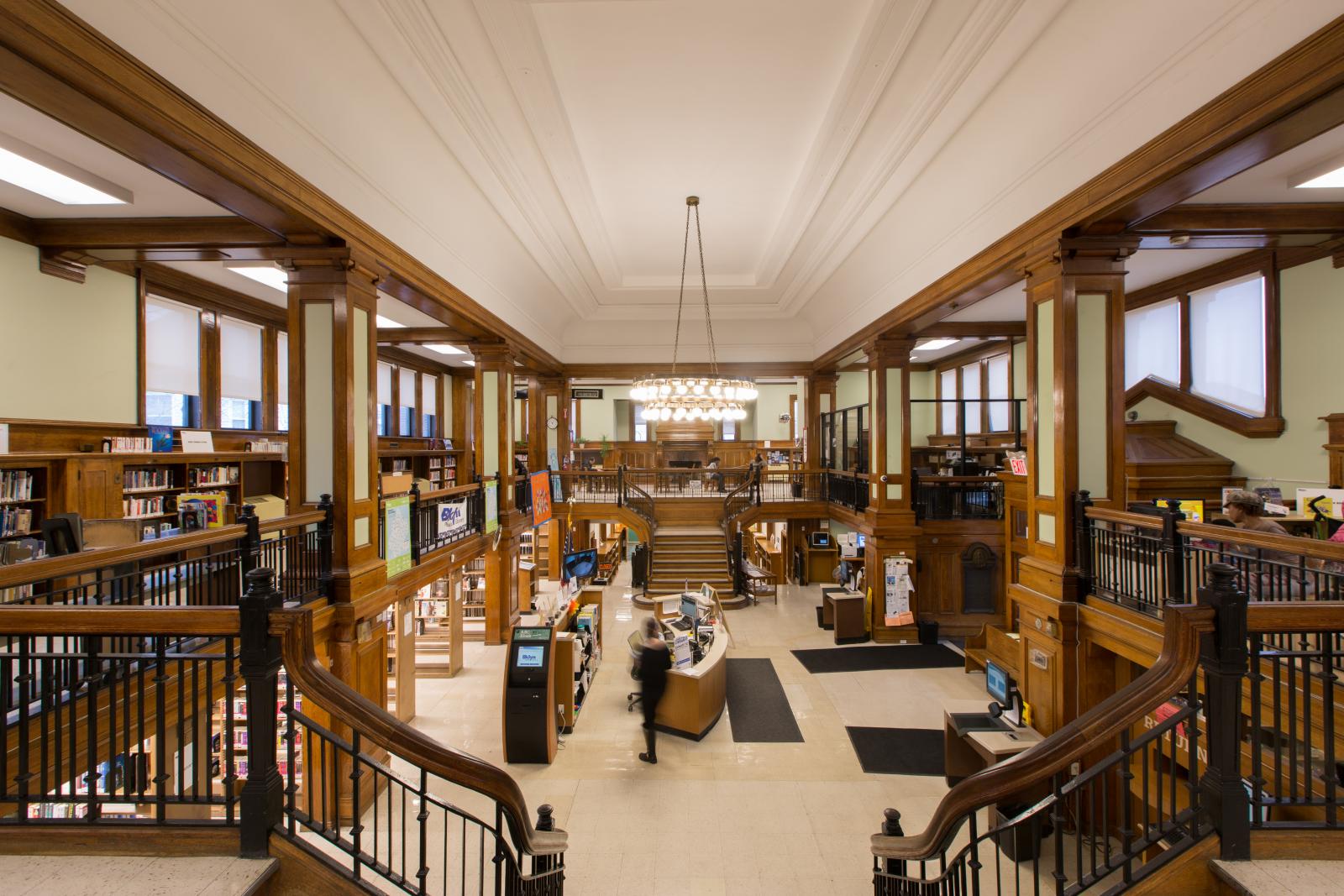
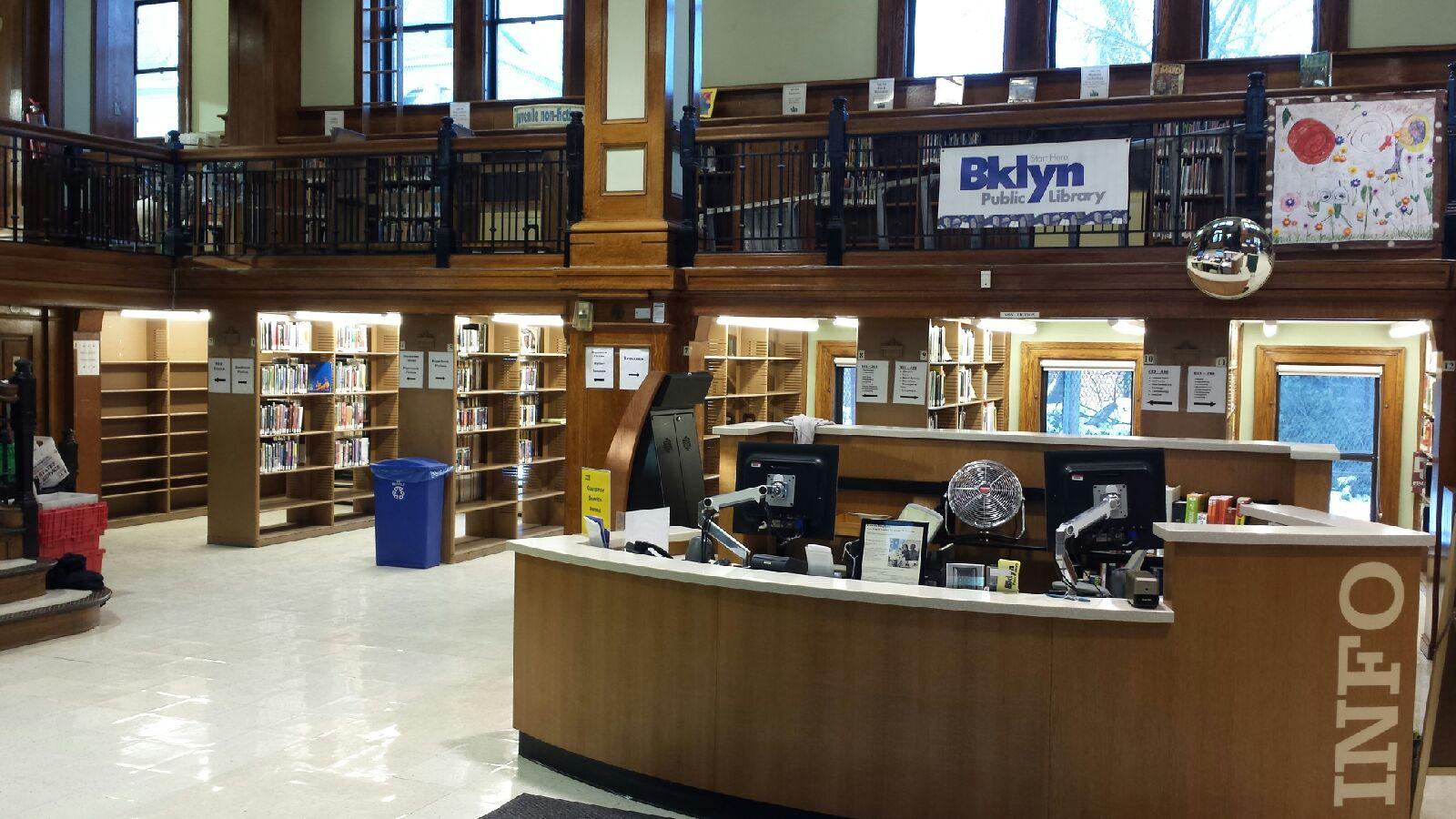
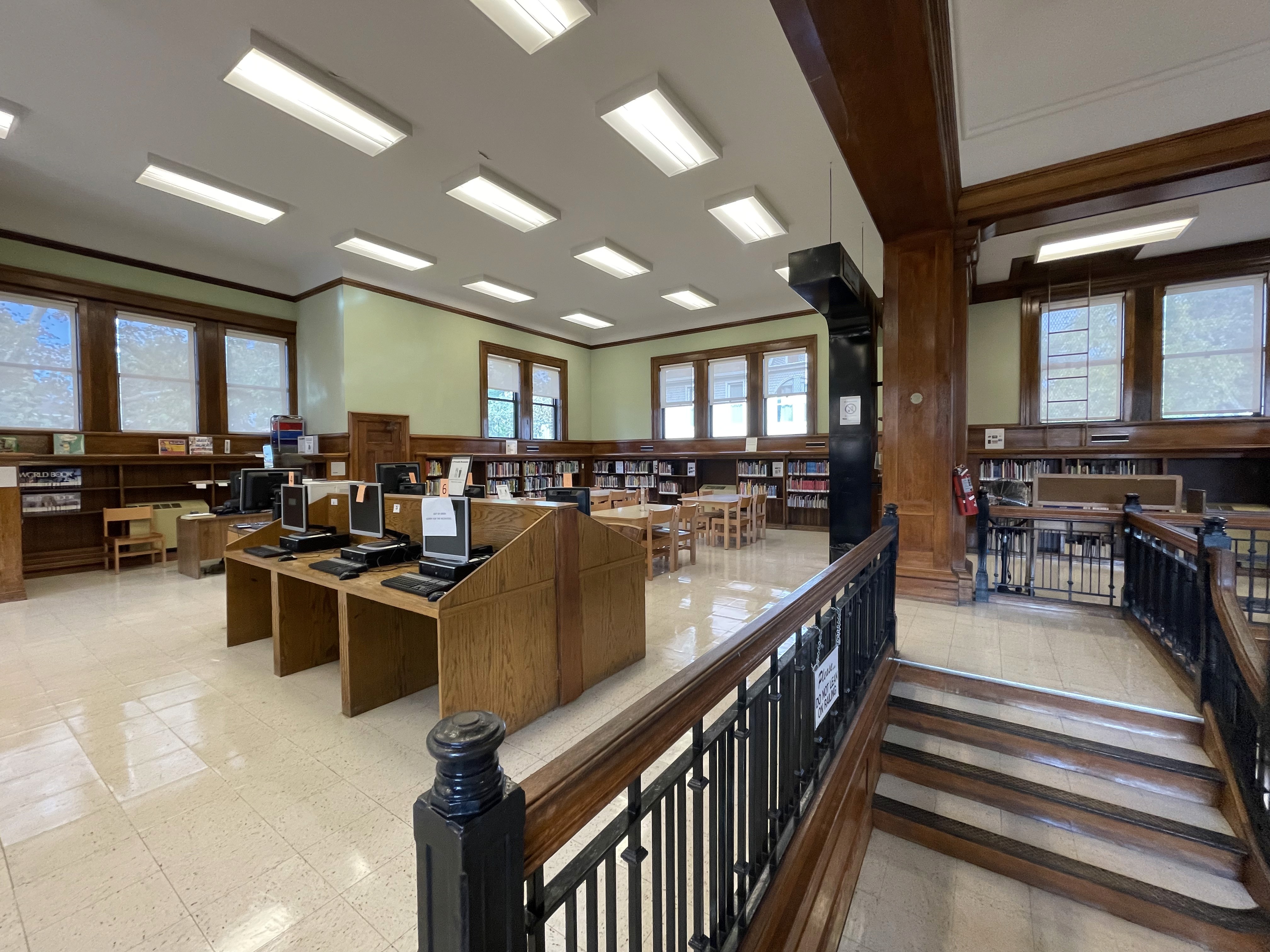
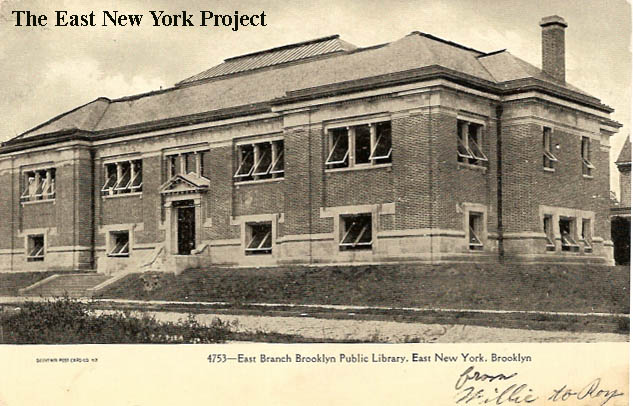
Original Brooklyn Library
Sketch
Re-design floor plans
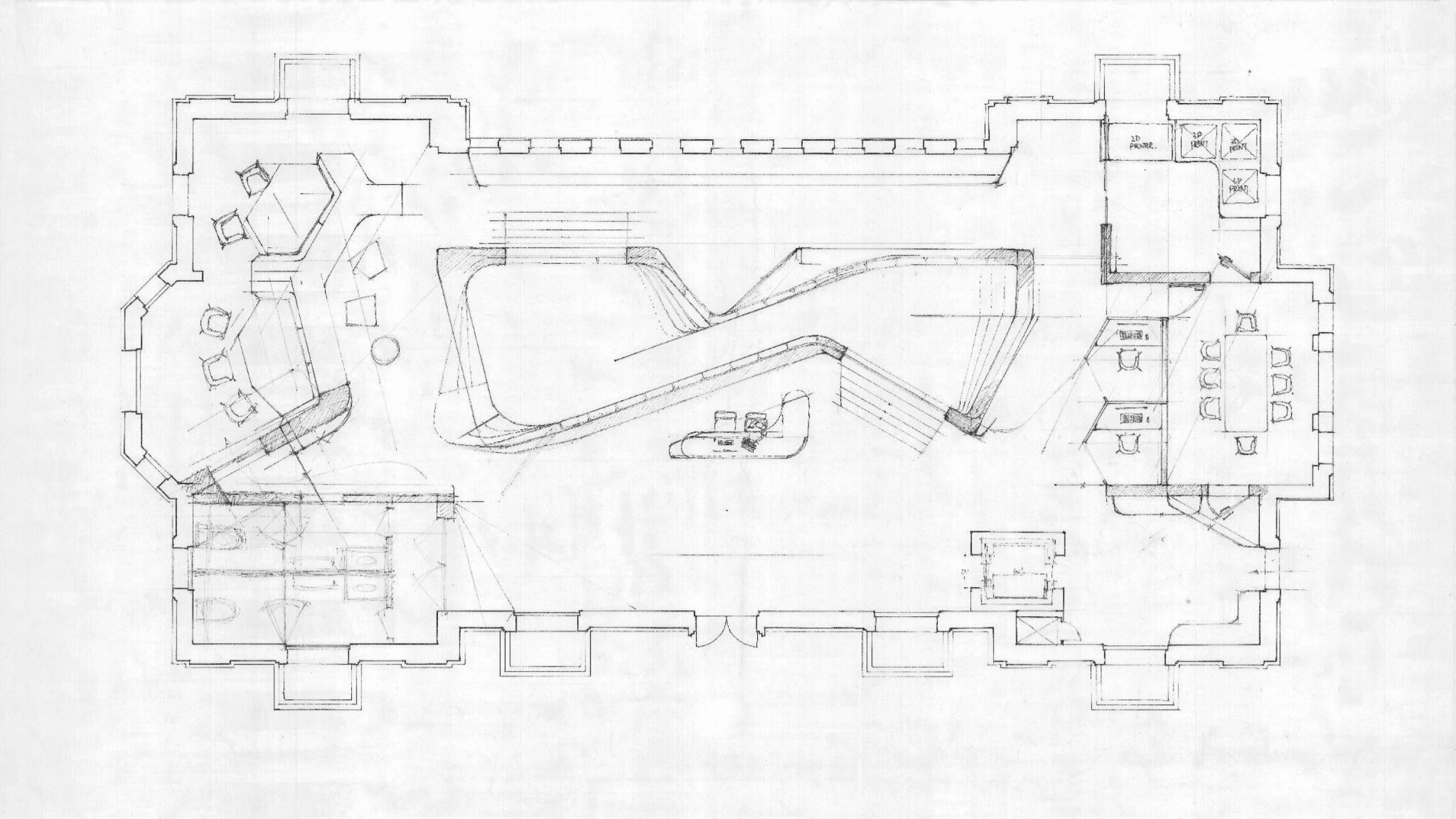
First Floor — The ground level balances arrival and activity
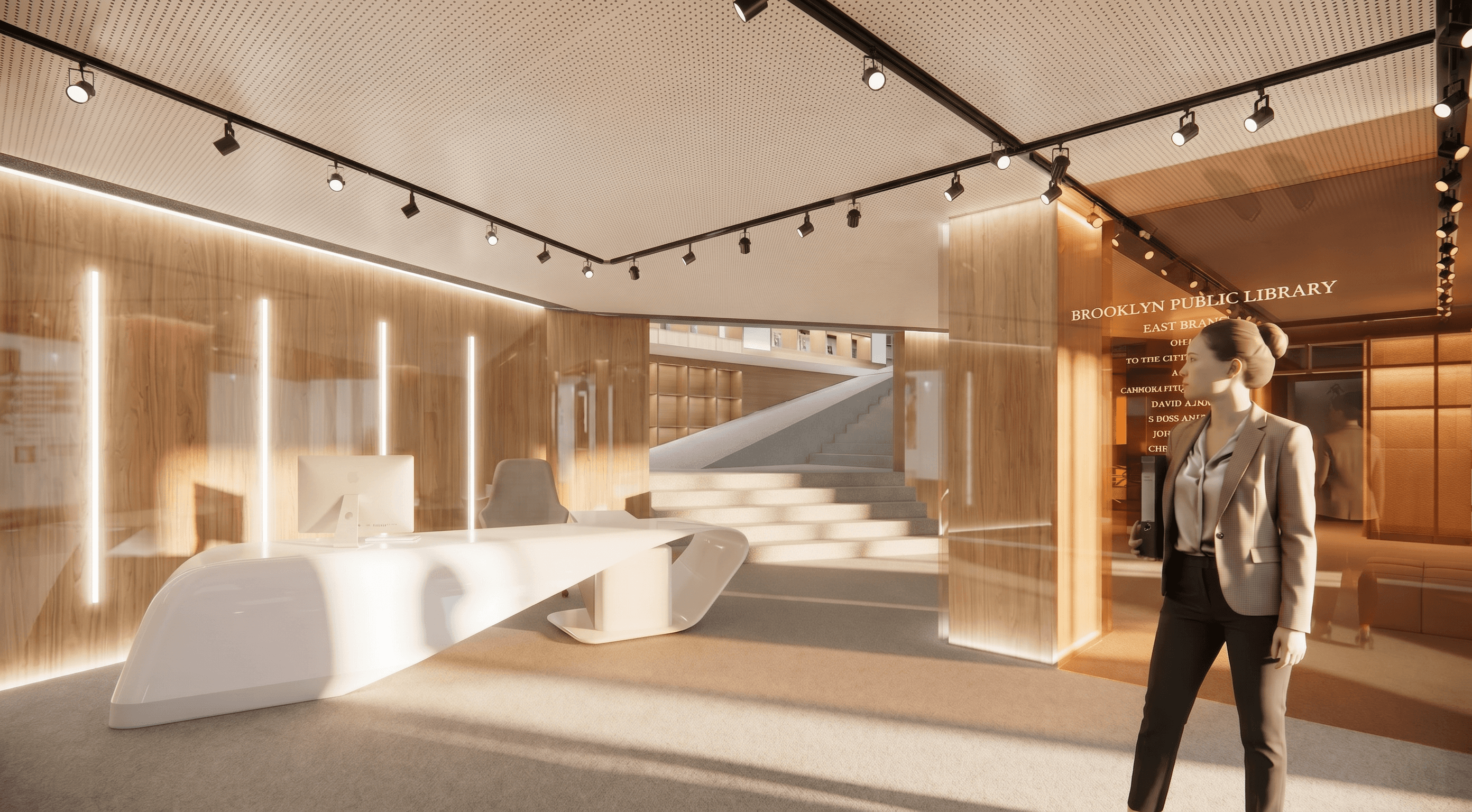
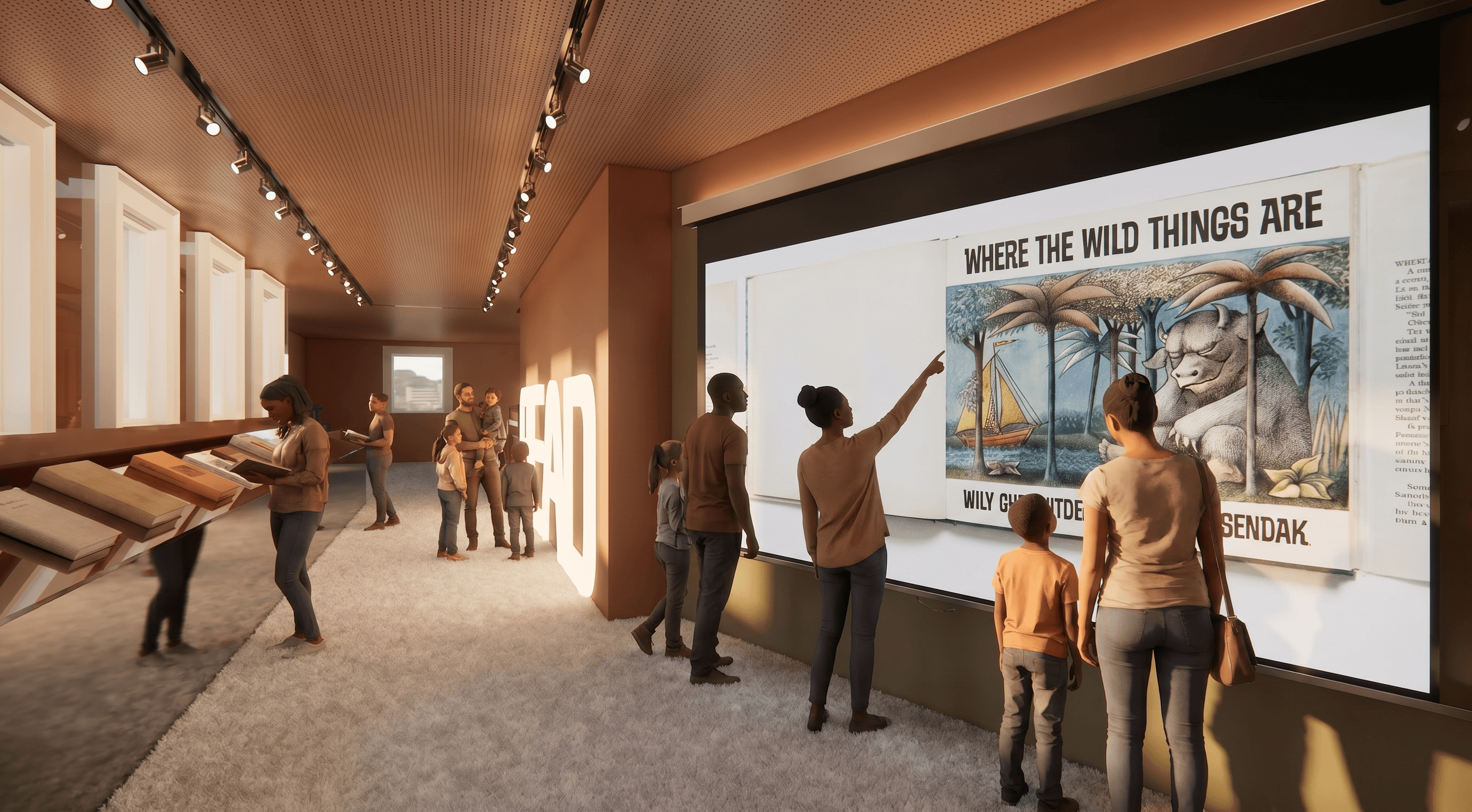
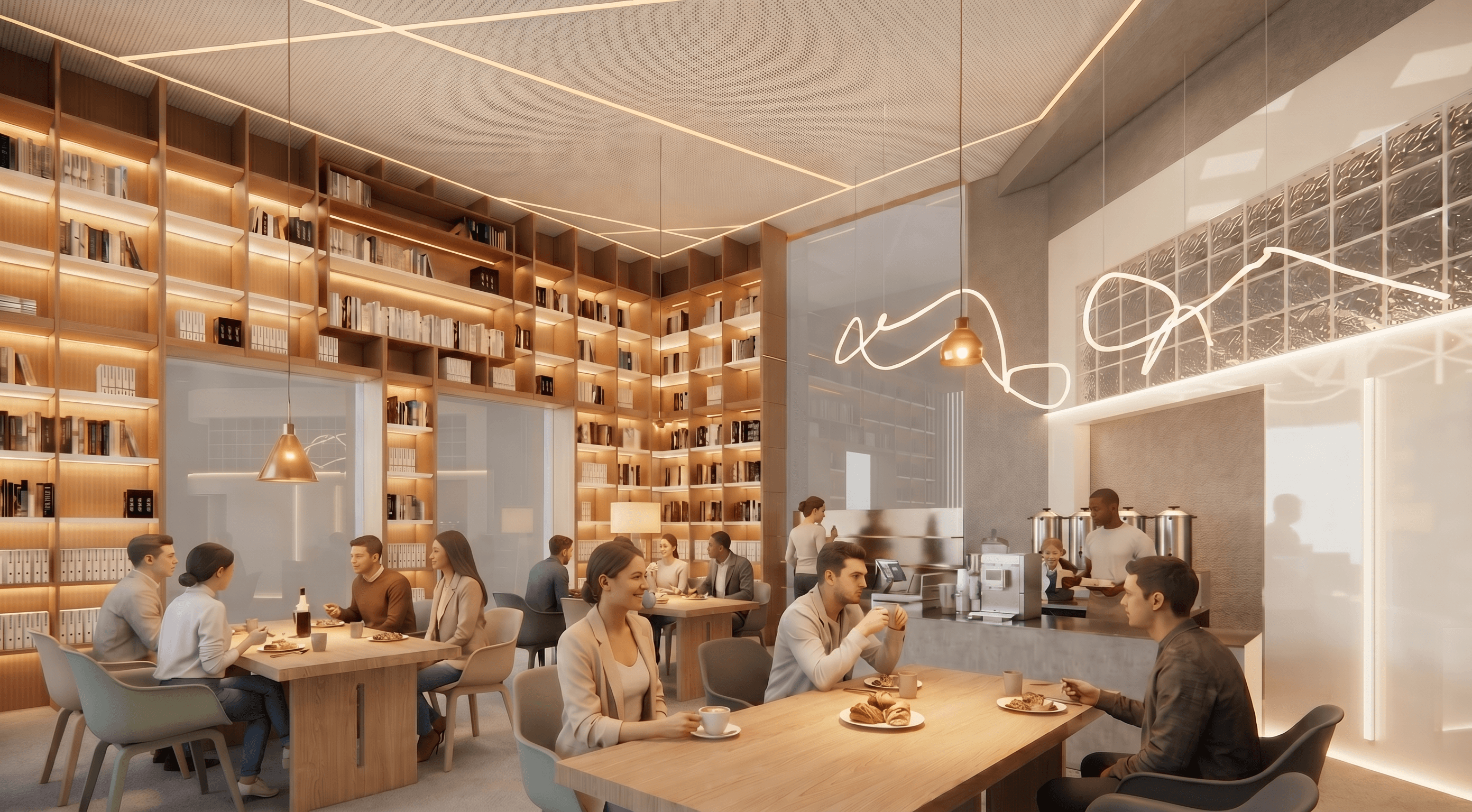
Entry and reception sit at the front; café, dining, and restrooms to the left; elevator, staff facilities, and offices to the right; a gallery corridor runs along the rear. Both the entry sequence and the corridor lead inward to a raised central platform — flanked by bookshelves on either side — that serves simultaneously as reading zone, passage, and the departure point for the staircases above.
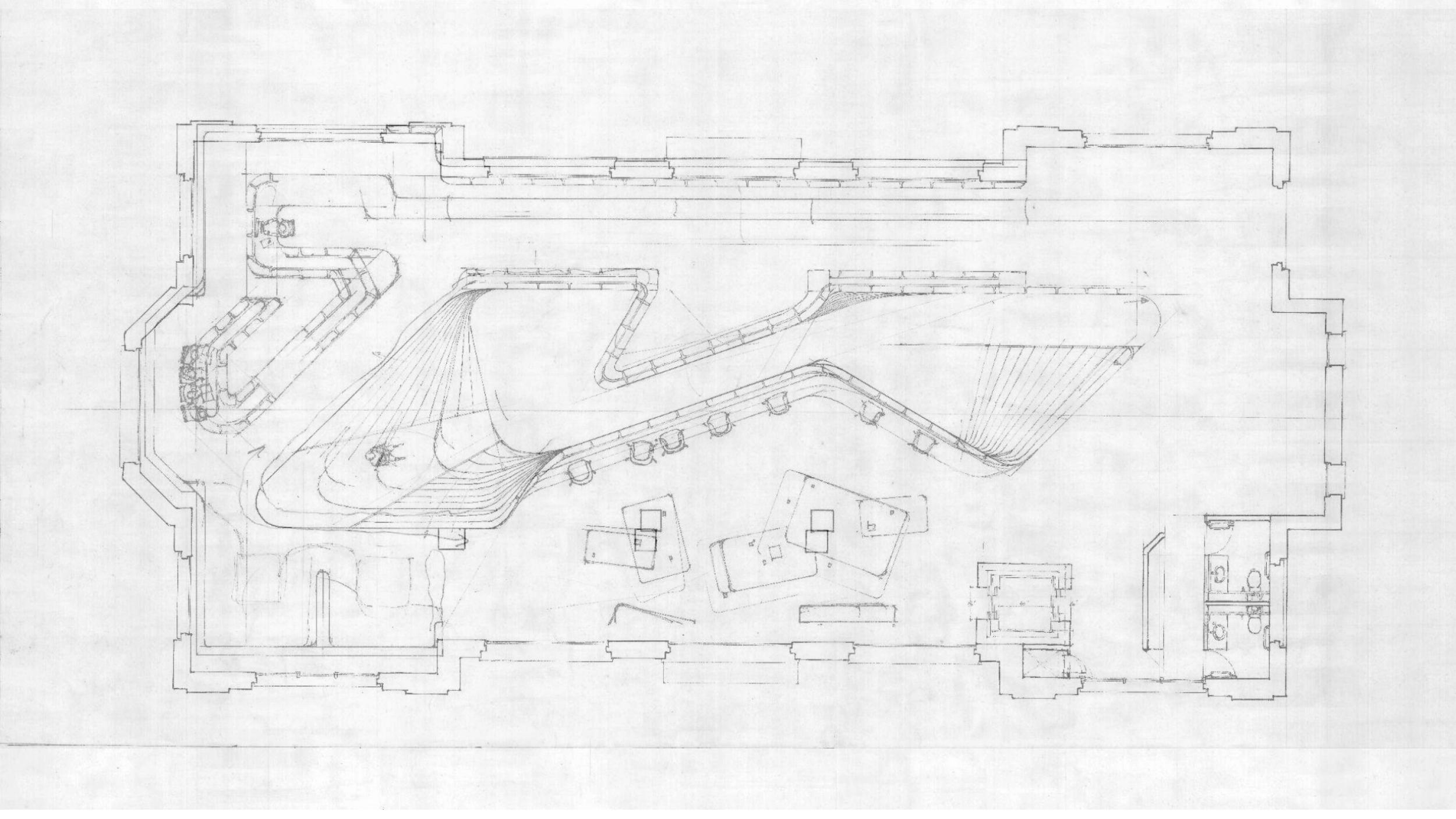
Second Floor — A landscape for dwelling
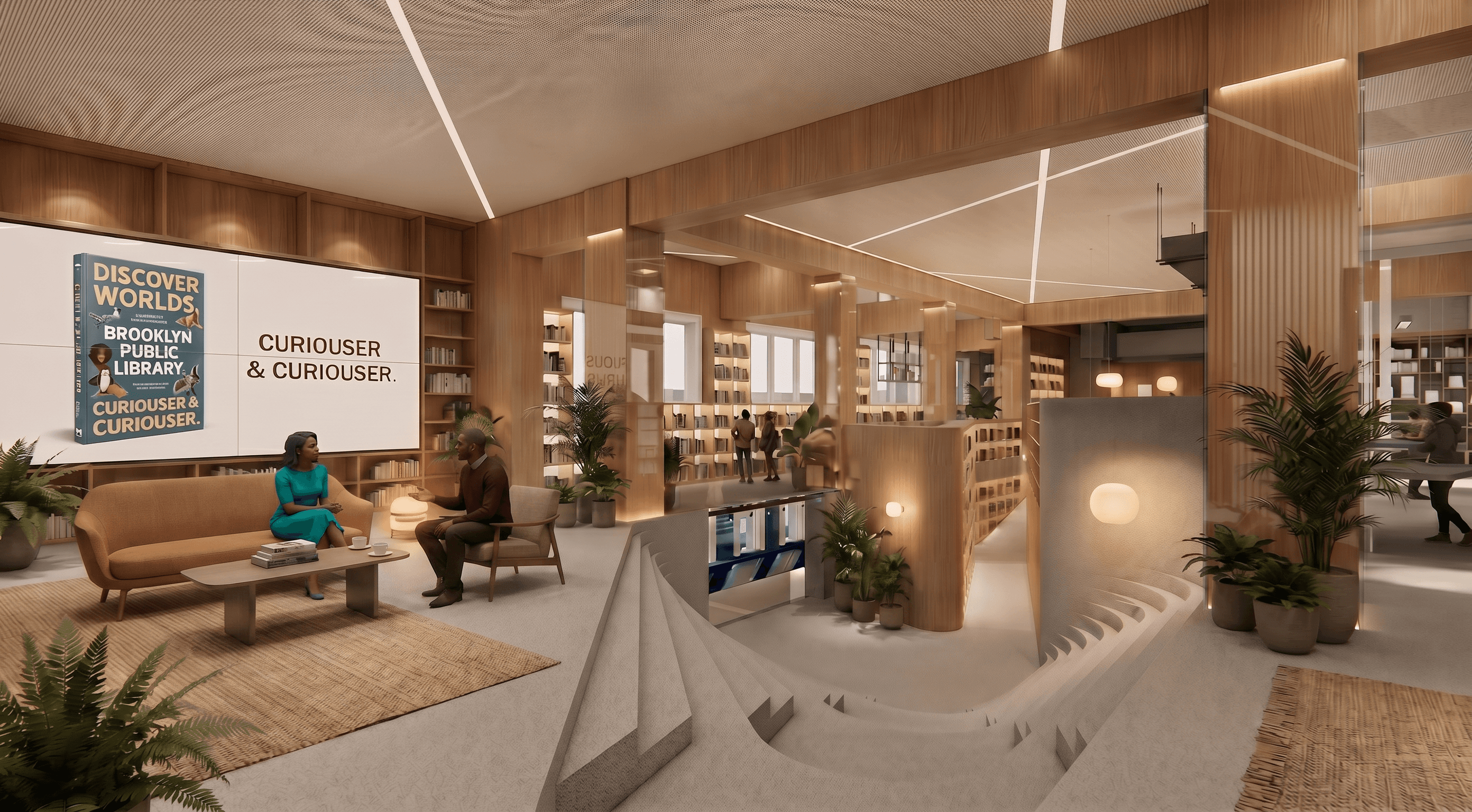
Bookshelves define the floor without enclosing it. Soft seating, reading areas, and a large display screen are distributed across an open field — each zone distinct, yet uninterrupted. The second floor is where visitors settle in.
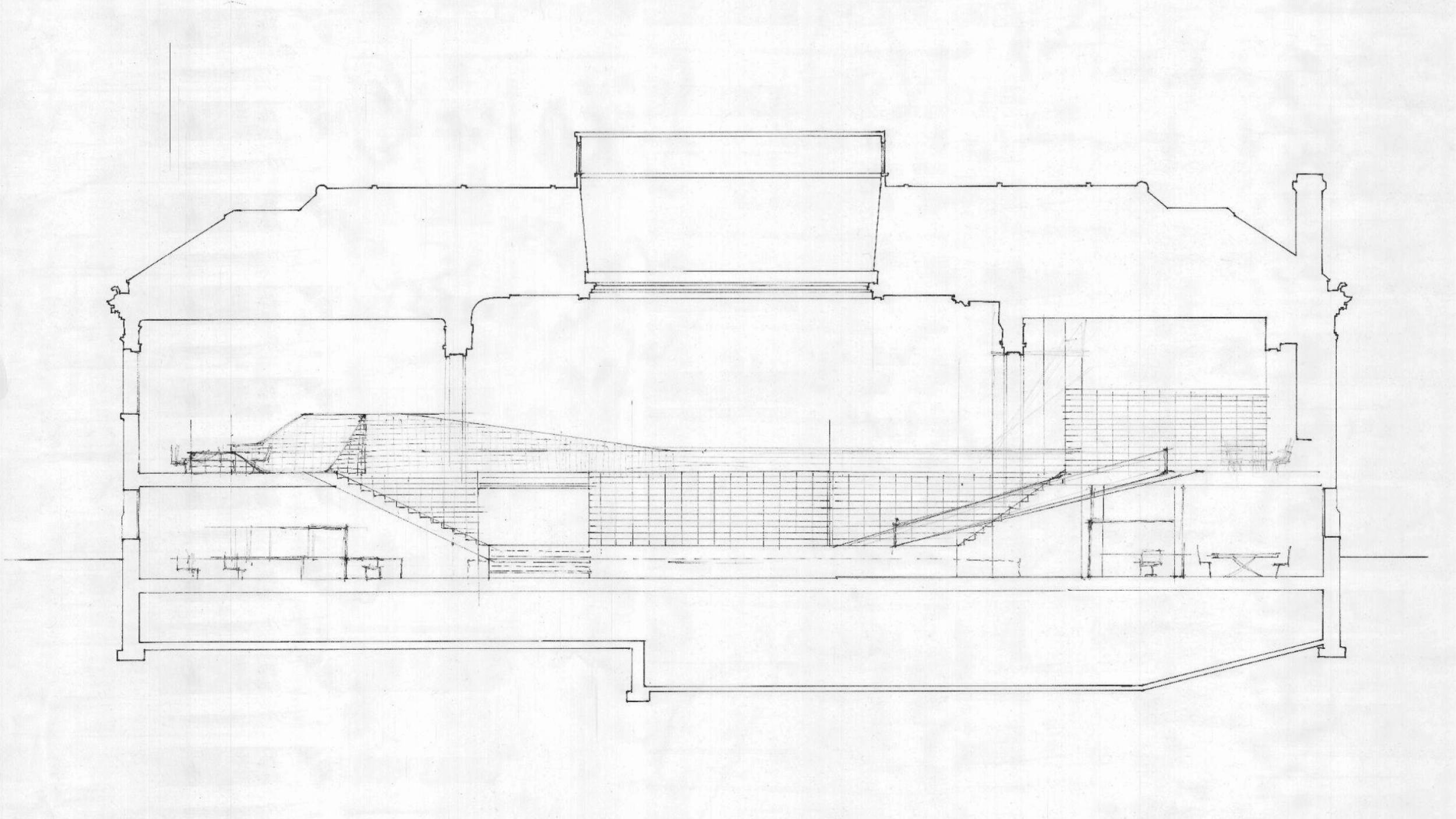
Section — The section reveals the spatial logic of the design
Learnings
Space Shapes How We Think
Knowledge isn't absorbed — it's encountered. The moment a ceiling opens up, a staircase curves unexpectedly, or a threshold shifts underfoot, the body reorients before the mind follows. Designing public space means designing the conditions for thought — where people pause, what they see next, how they move through what they don't yet know.
Spatial section drawing, circulation planning, and the calibration of scale and threshold — these are not interior design skills. They are the foundations of any environment a body moves through, physical or virtual. Designing this library taught me to think in space first. That instinct translates directly into XR: how a virtual room is entered, how attention is directed without a cursor, how presence is felt before it is understood.
2022
Brooklyn Library
Brooklyn Library interior redesign
Academic Exploration
Interior
Architecture
Intro
Libraries are often defined by stillness. This project challenges that assumption.
My role in the project
Interior designer · concept, design, and 3D visualization.
Problem
Original Brooklyn Library
Sketch
Re-design floor plans
First Floor — The ground level balances arrival and activity
Entry and reception sit at the front; café, dining, and restrooms to the left; elevator, staff facilities, and offices to the right; a gallery corridor runs along the rear. Both the entry sequence and the corridor lead inward to a raised central platform — flanked by bookshelves on either side — that serves simultaneously as reading zone, passage, and the departure point for the staircases above.
Second Floor — A landscape for dwelling
Bookshelves define the floor without enclosing it. Soft seating, reading areas, and a large display screen are distributed across an open field — each zone distinct, yet uninterrupted. The second floor is where visitors settle in.
Section — The section reveals the spatial logic of the design
Learnings
Space Shapes How We Think
Knowledge isn't absorbed — it's encountered. The moment a ceiling opens up, a staircase curves unexpectedly, or a threshold shifts underfoot, the body reorients before the mind follows. Designing public space means designing the conditions for thought — where people pause, what they see next, how they move through what they don't yet know.
Spatial section drawing, circulation planning, and the calibration of scale and threshold — these are not interior design skills. They are the foundations of any environment a body moves through, physical or virtual. Designing this library taught me to think in space first. That instinct translates directly into XR: how a virtual room is entered, how attention is directed without a cursor, how presence is felt before it is understood.
2022
Brooklyn Library
Brooklyn Library interior redesign
Academic Exploration
Interior
Architecture
Intro
Libraries are often defined by stillness. This project challenges that assumption.
My role in the project
Interior designer · concept, design, and 3D visualization.
Problem
Original Brooklyn Library
Sketch
Re-design floor plans
First Floor — The ground level balances arrival and activity
Entry and reception sit at the front; café, dining, and restrooms to the left; elevator, staff facilities, and offices to the right; a gallery corridor runs along the rear. Both the entry sequence and the corridor lead inward to a raised central platform — flanked by bookshelves on either side — that serves simultaneously as reading zone, passage, and the departure point for the staircases above.
Second Floor — A landscape for dwelling
Bookshelves define the floor without enclosing it. Soft seating, reading areas, and a large display screen are distributed across an open field — each zone distinct, yet uninterrupted. The second floor is where visitors settle in.
Section — The section reveals the spatial logic of the design
Learnings
Space Shapes How We Think
Knowledge isn't absorbed — it's encountered. The moment a ceiling opens up, a staircase curves unexpectedly, or a threshold shifts underfoot, the body reorients before the mind follows. Designing public space means designing the conditions for thought — where people pause, what they see next, how they move through what they don't yet know.
Spatial section drawing, circulation planning, and the calibration of scale and threshold — these are not interior design skills. They are the foundations of any environment a body moves through, physical or virtual. Designing this library taught me to think in space first. That instinct translates directly into XR: how a virtual room is entered, how attention is directed without a cursor, how presence is felt before it is understood.