
2022
FloodLeaf
A flood-response bollard that filters drinking water and deploys emergency liferafts — inspired by springtails, salps, earwigs, and lily pads.
Academic Exploration
Industrial Design
Biomimicry
Intro
What if a bio-inspired bollard could save your life from a flood?
My role in the project
Sole designer · research, concept, biomimicry strategy, industrial design, and 3D visualization.
Design Brief
The design concept aims to help those in need get clean water quickly and conveniently, and provide a temporary liferaft solution for people to stay waiting for rescue
The Climate crisis has had a profound effect on the weather. It causes river floods to become larger or more frequent than they used to be in many places, and exacerbate extreme flood events.
But the flood isn't just take away human life, it also poses a particular threat to drinking water systems. Bacteria and microorganisms can end up everywhere along where the flood path through. So the two of the major challenges for those affected by natural flood disasters are finding clean drinking water and survival.
Research Bio-solution
I Ask … How Does Nature Solves These Problems?
I studied five organisms and translated their survival strategies into design solutions
From filtering bacteria to deploying liferafts in seconds.
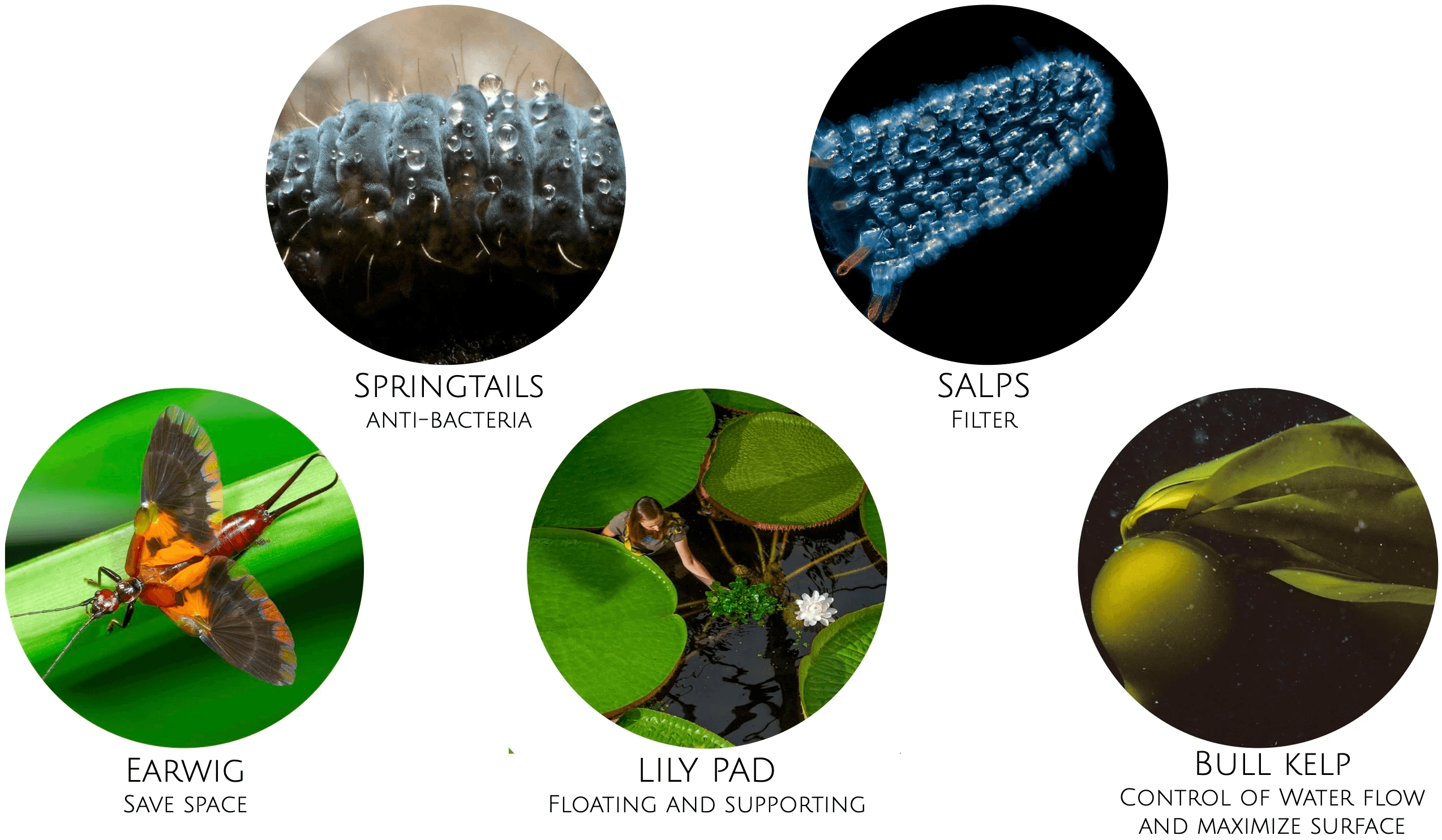
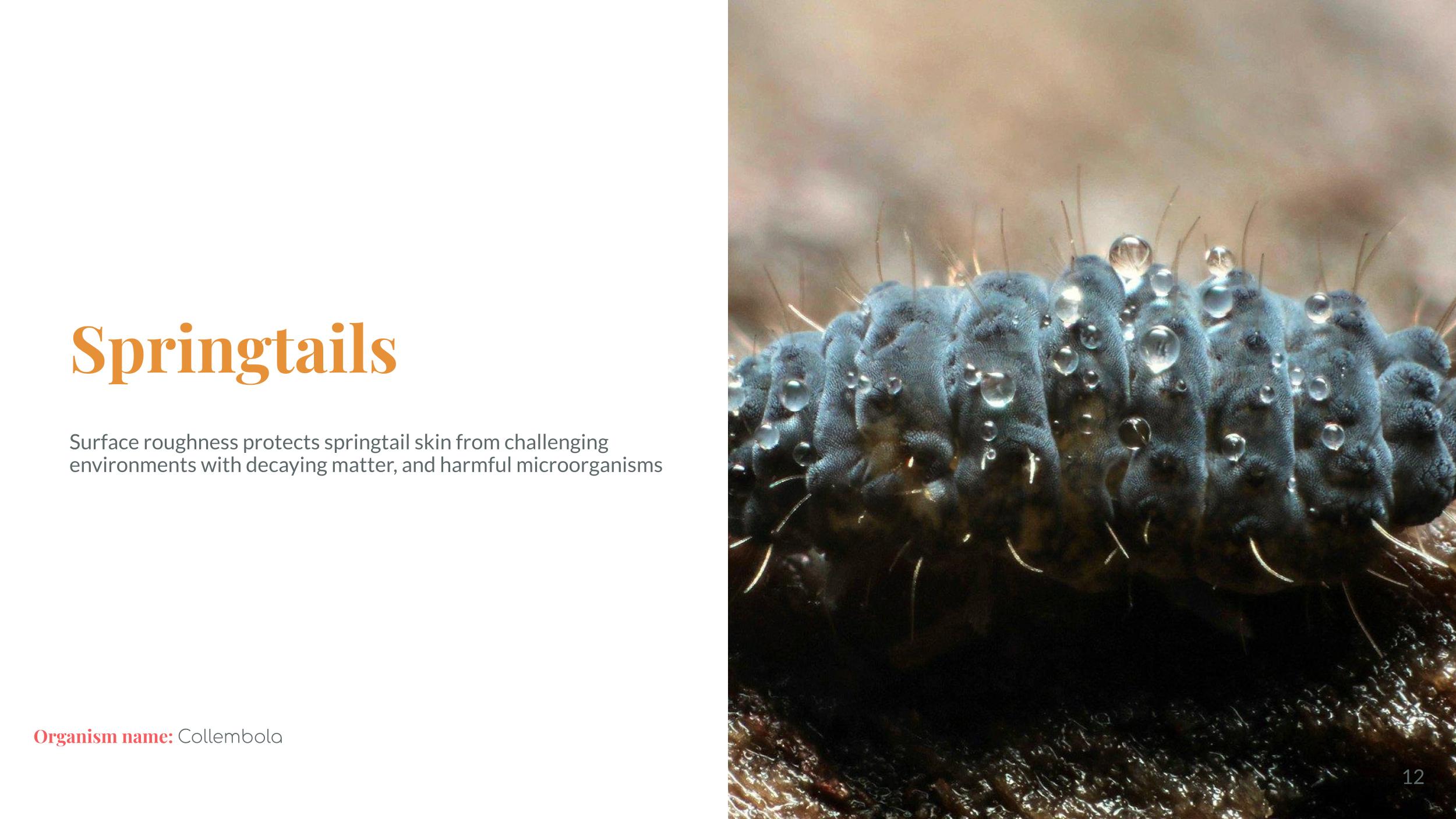
Springtails — Nano-scale skin texture repels bacteria and microorganisms without any coating.
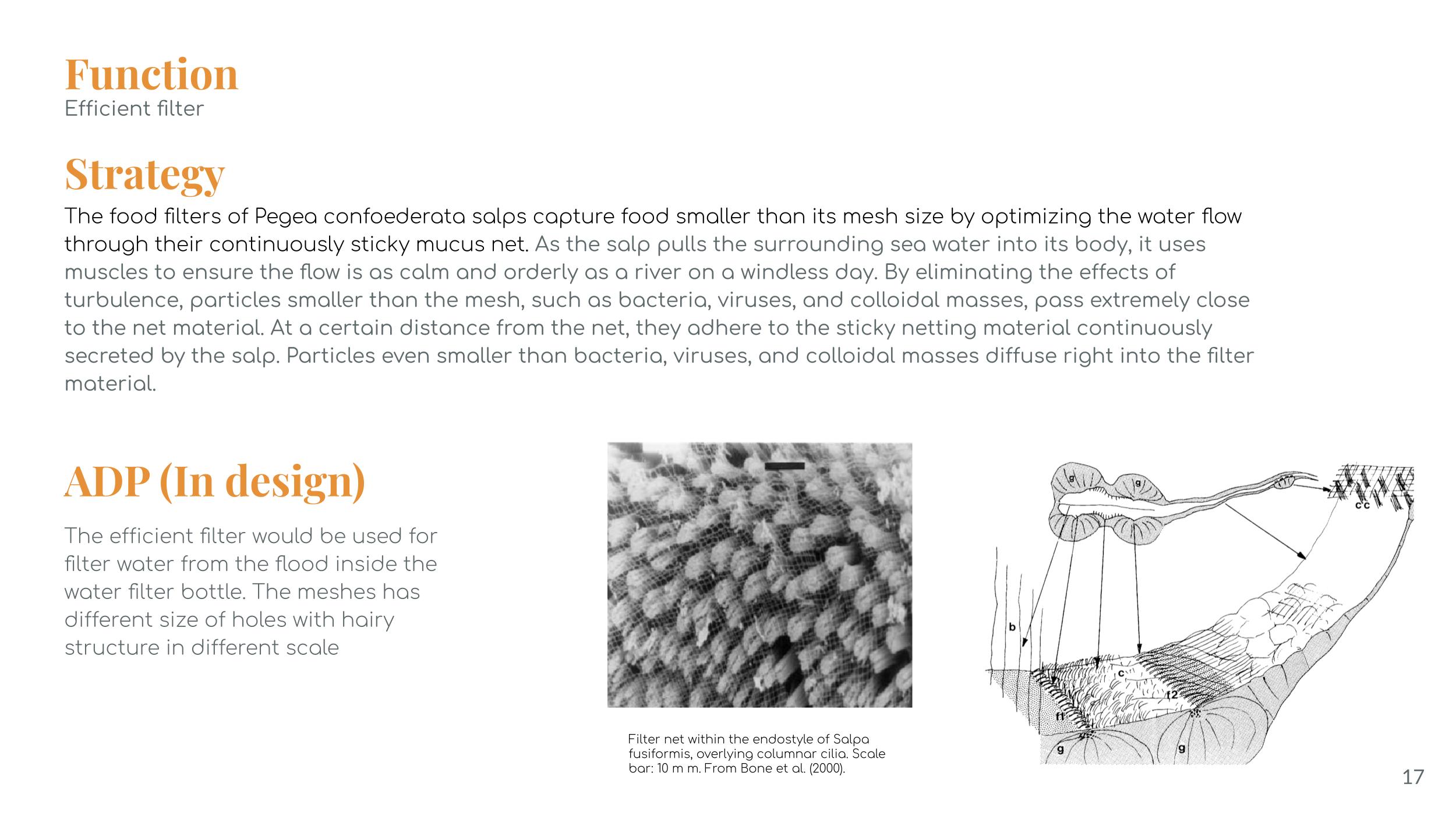
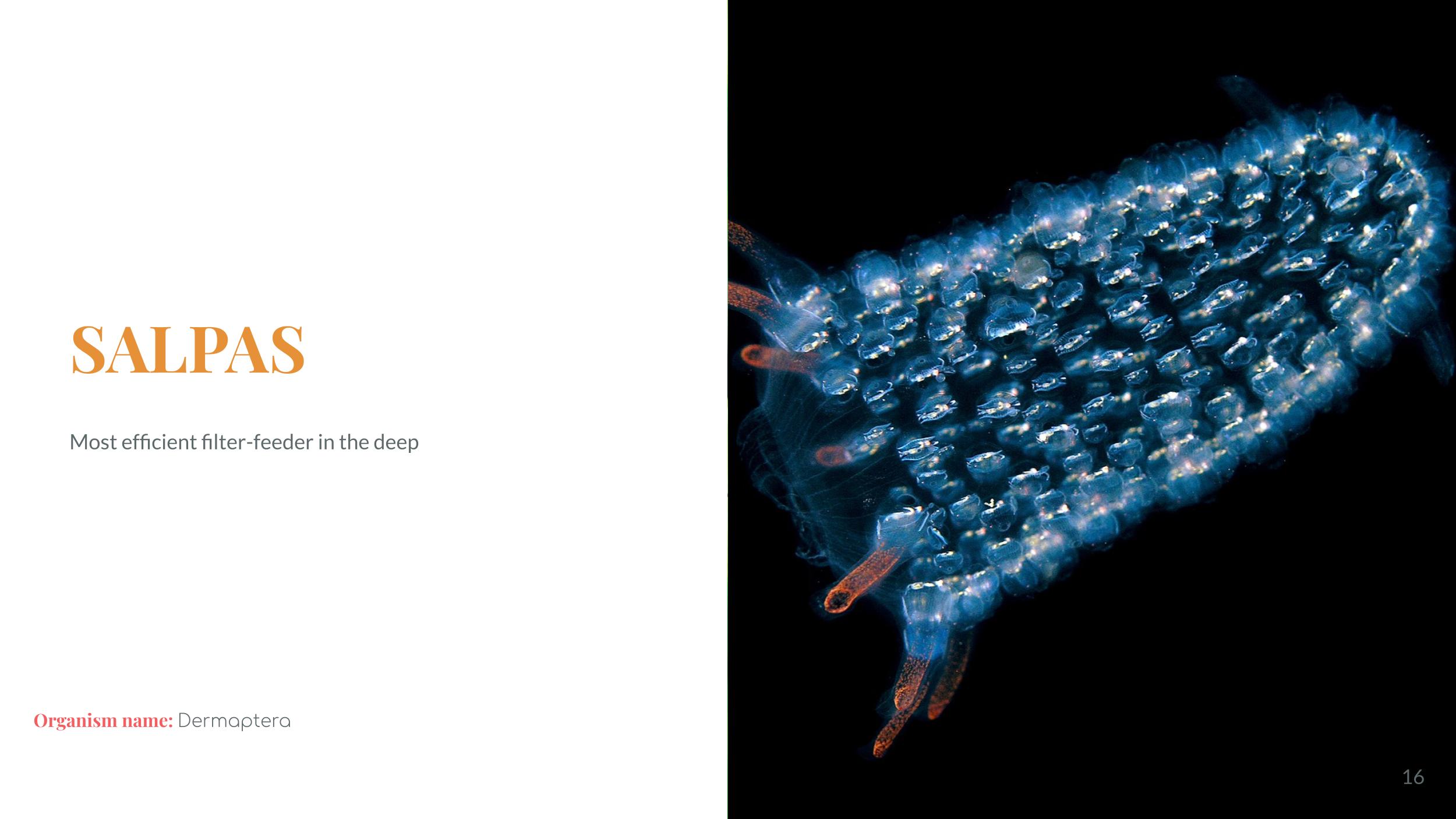
Salps — Sticky mucus nets capture particles smaller than the mesh, filtering even viruses from water.
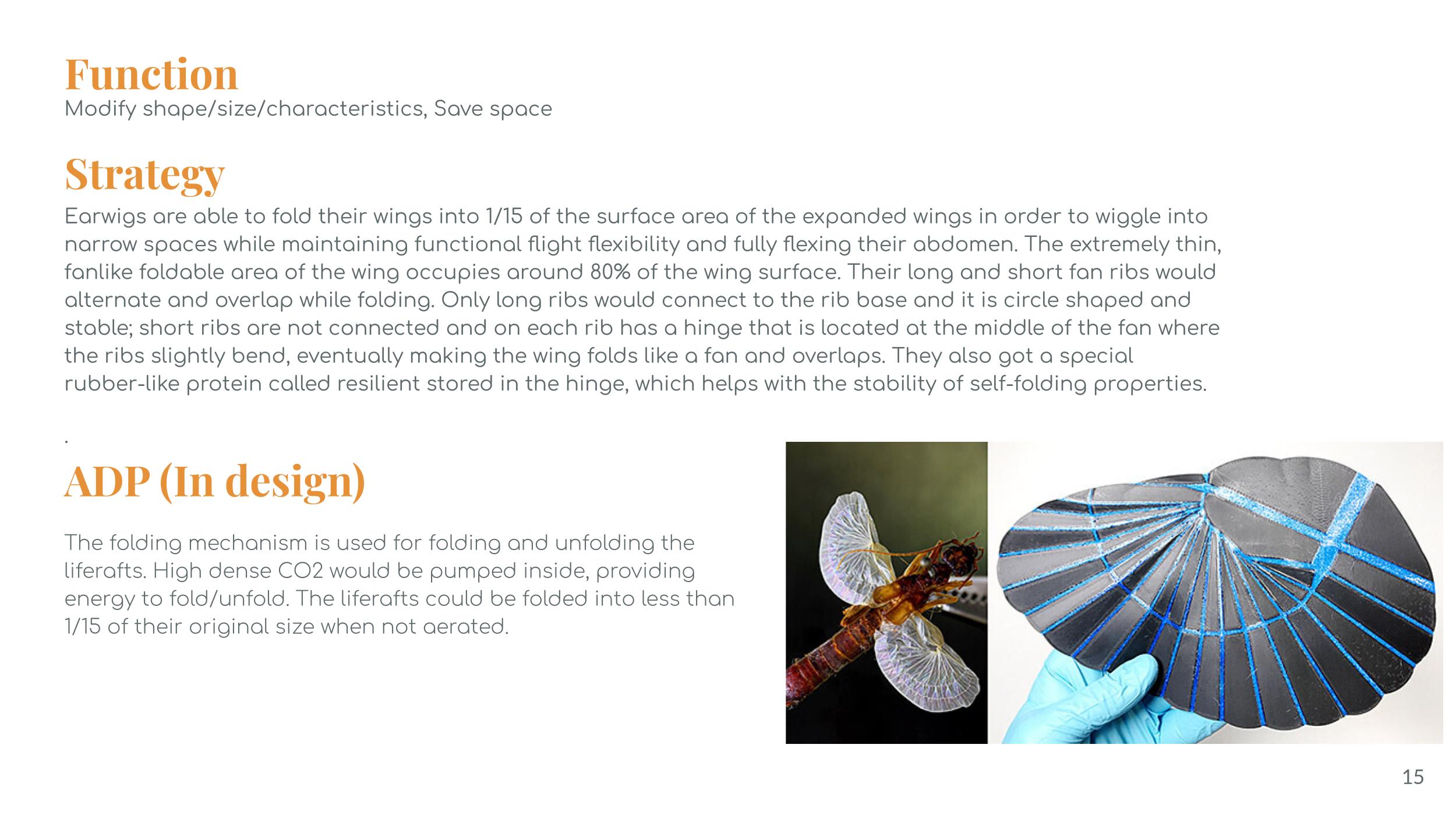
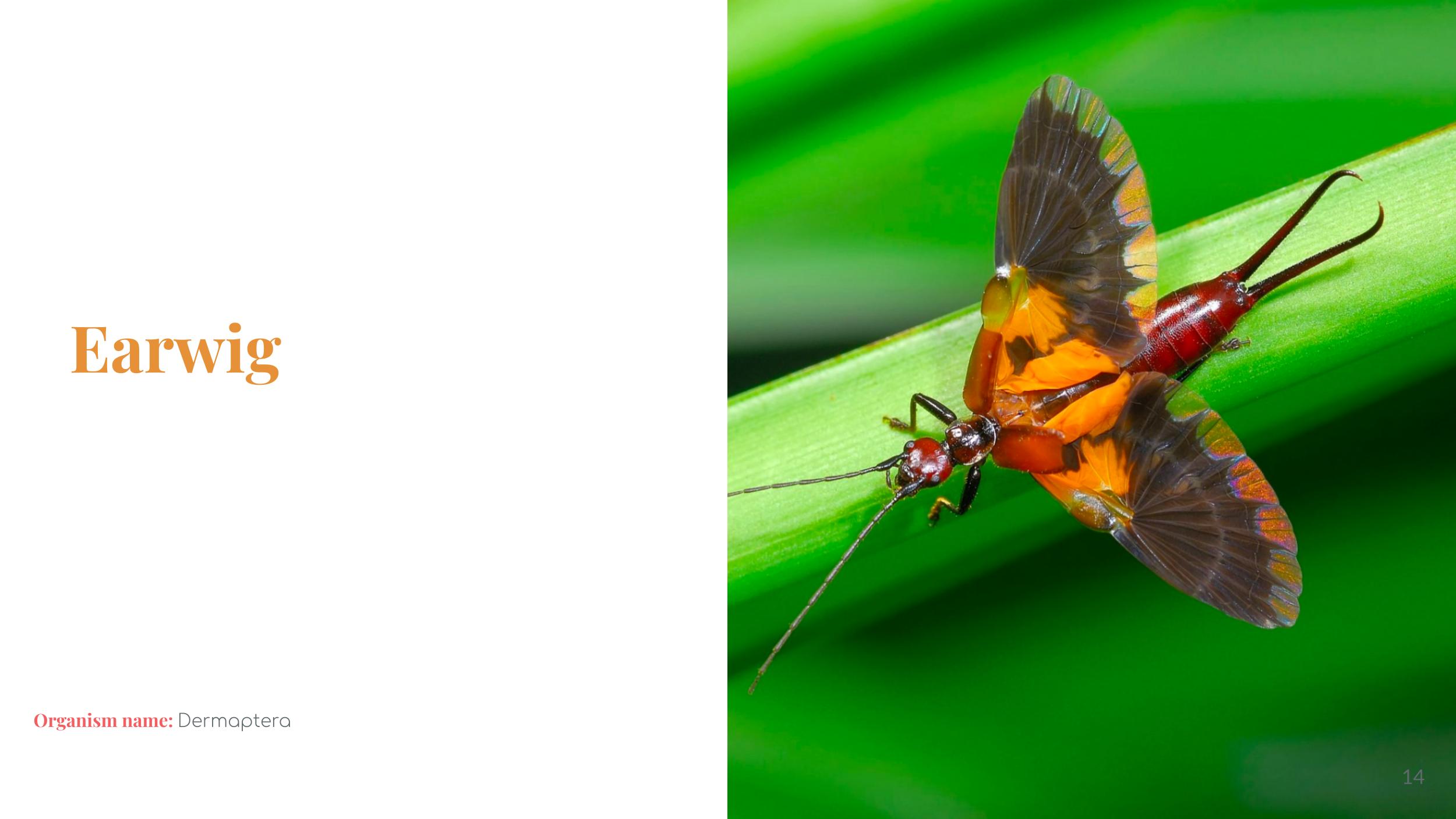
Earwigs — Wings fold to 1/15 their size, inspiring liferafts that deploy instantly from almost nothing.
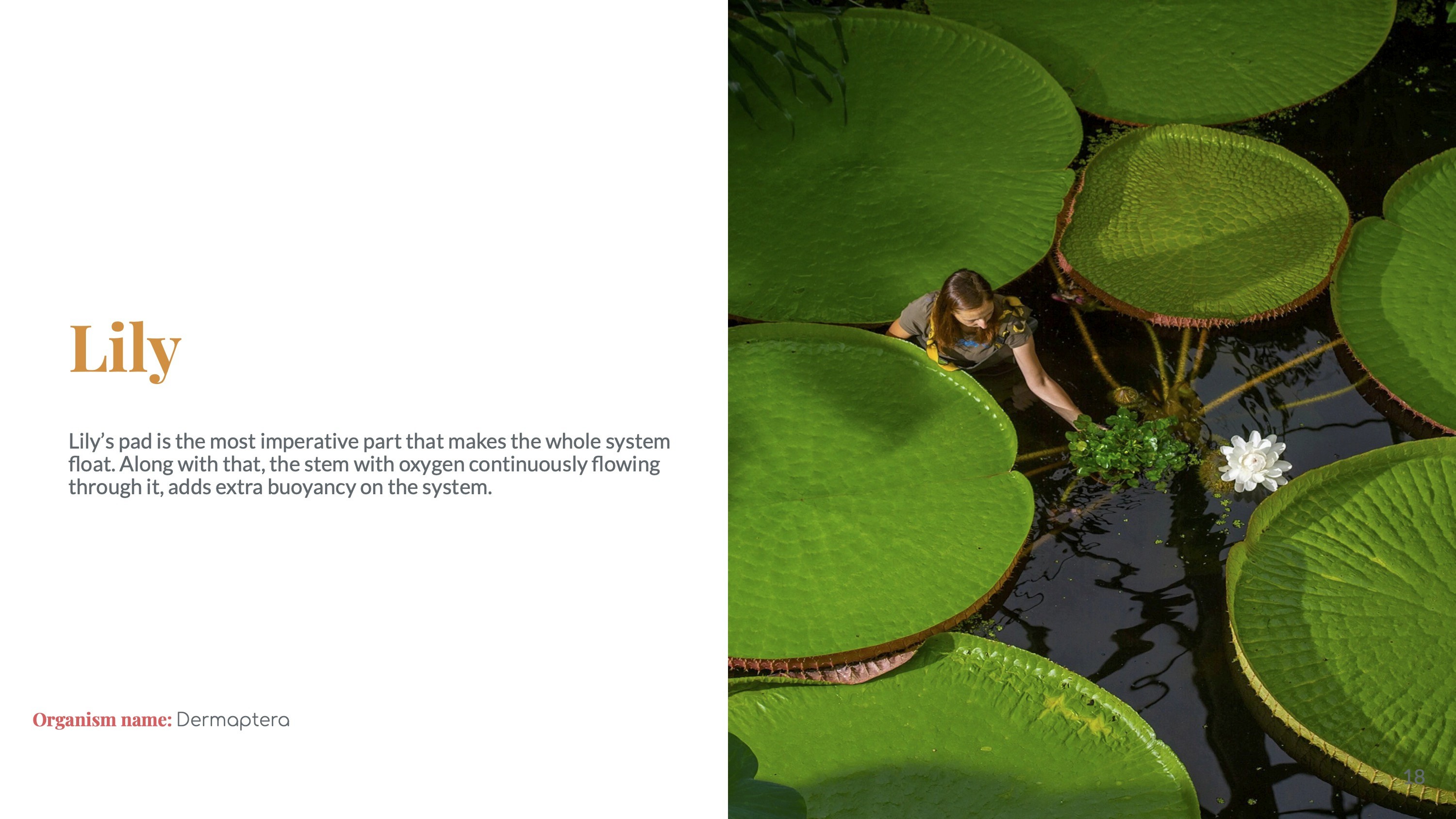
Lily Pad — Buoyant flat form with an oxygen-filled stem, keeping the whole system afloat under load.
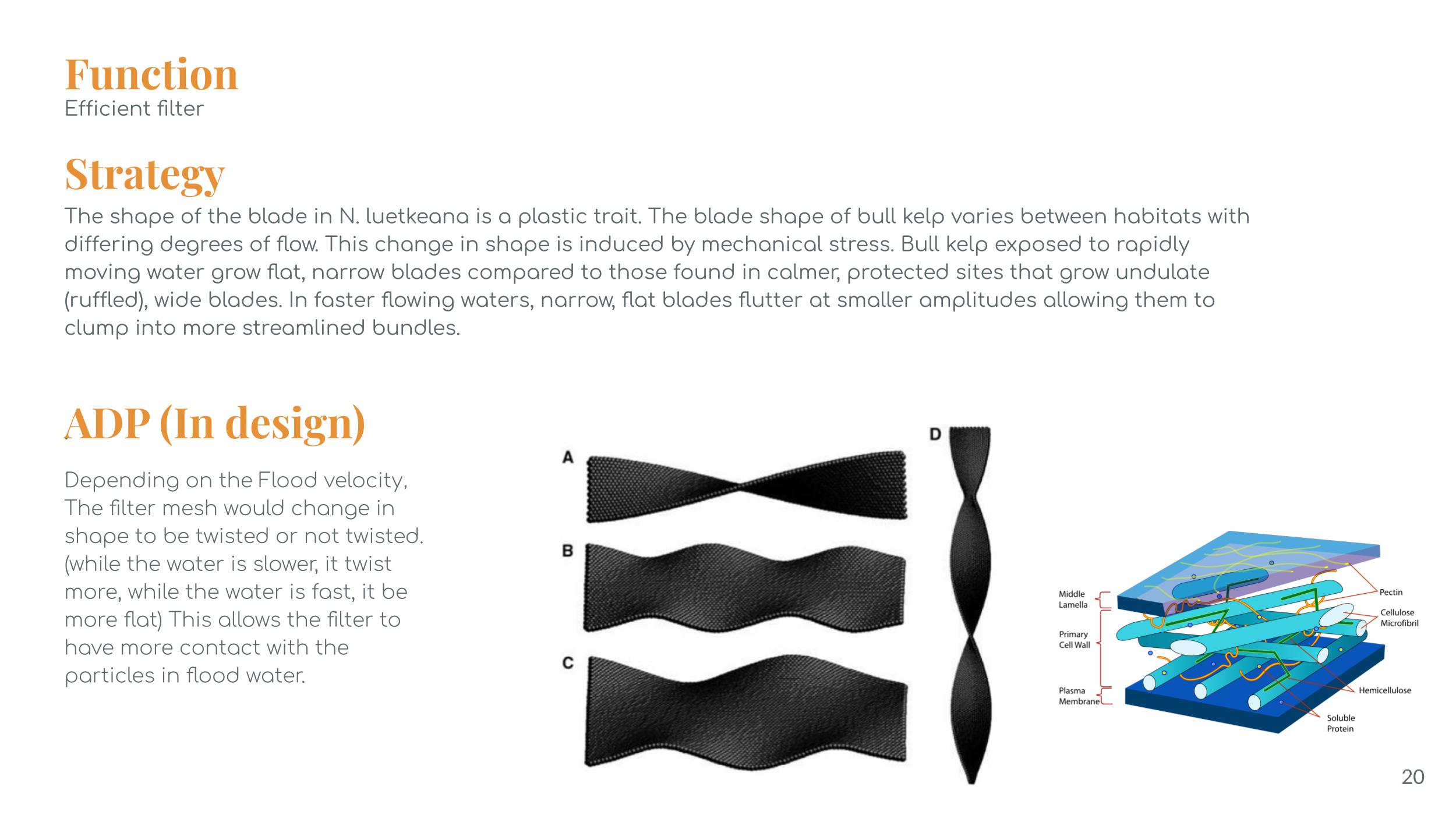
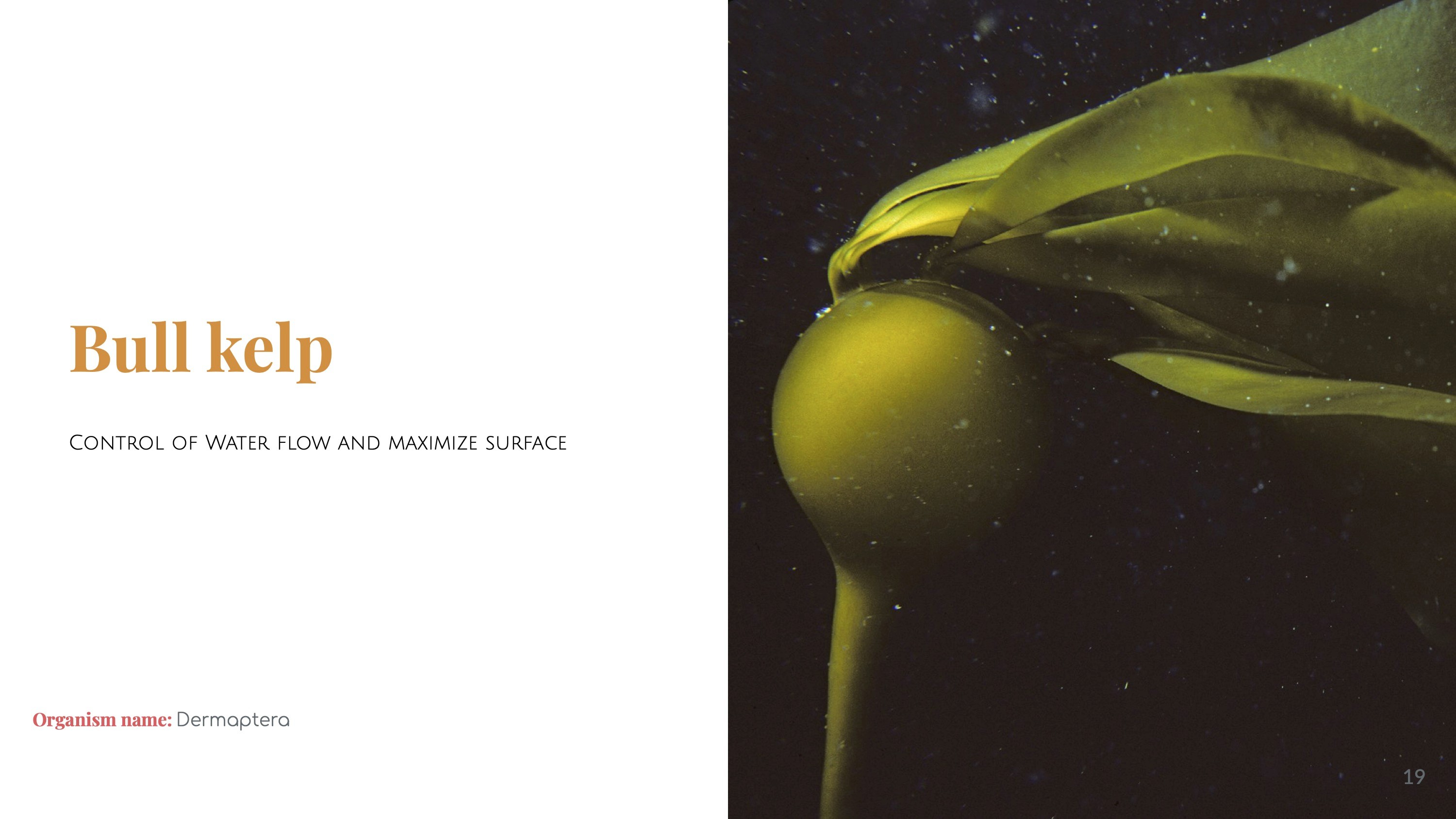
Bull Kelp — Blade shape shifts with water flow, maximizing filter surface contact at any flood speed.
Design
A water filtration system and emergency liferaft, hidden inside the bollards already lining your street
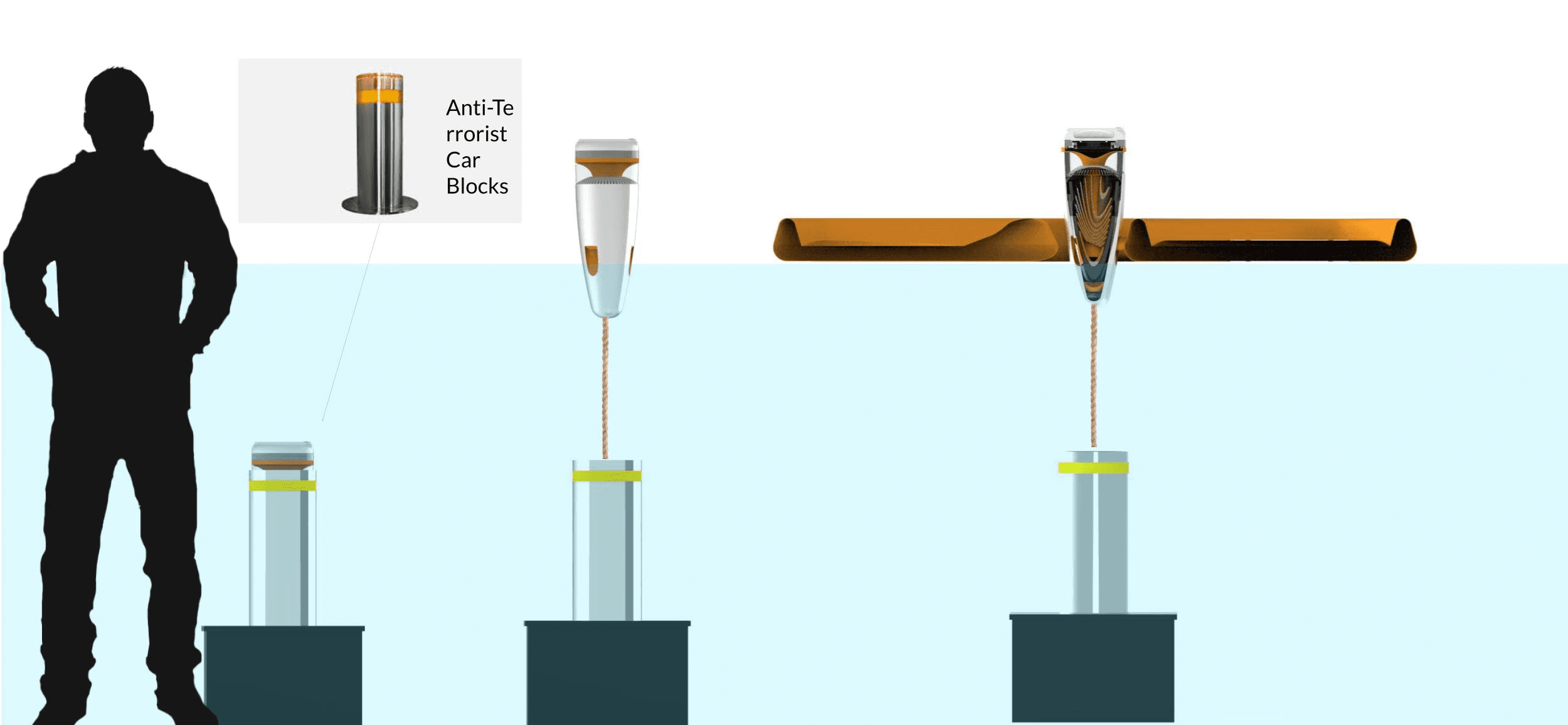
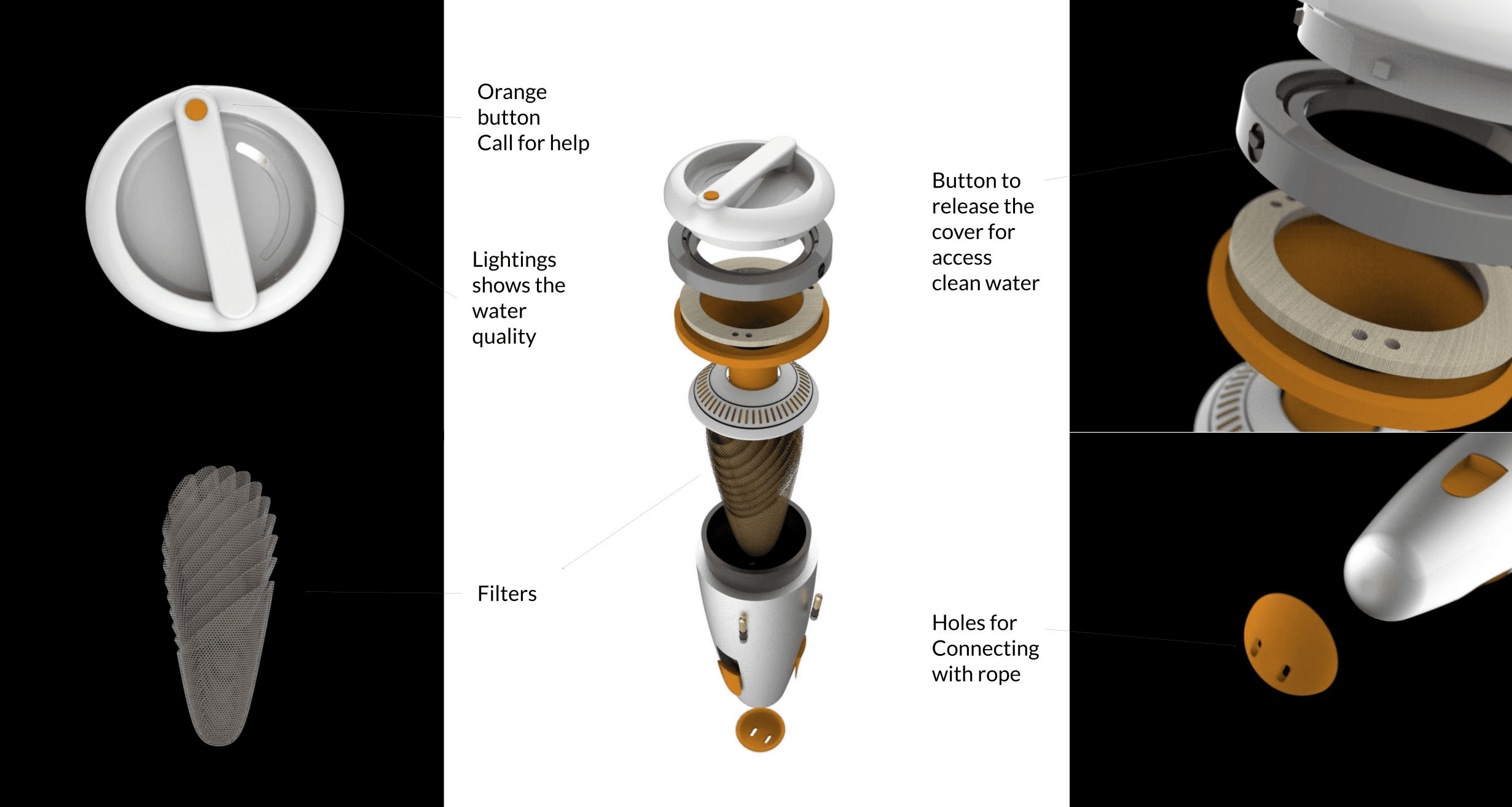
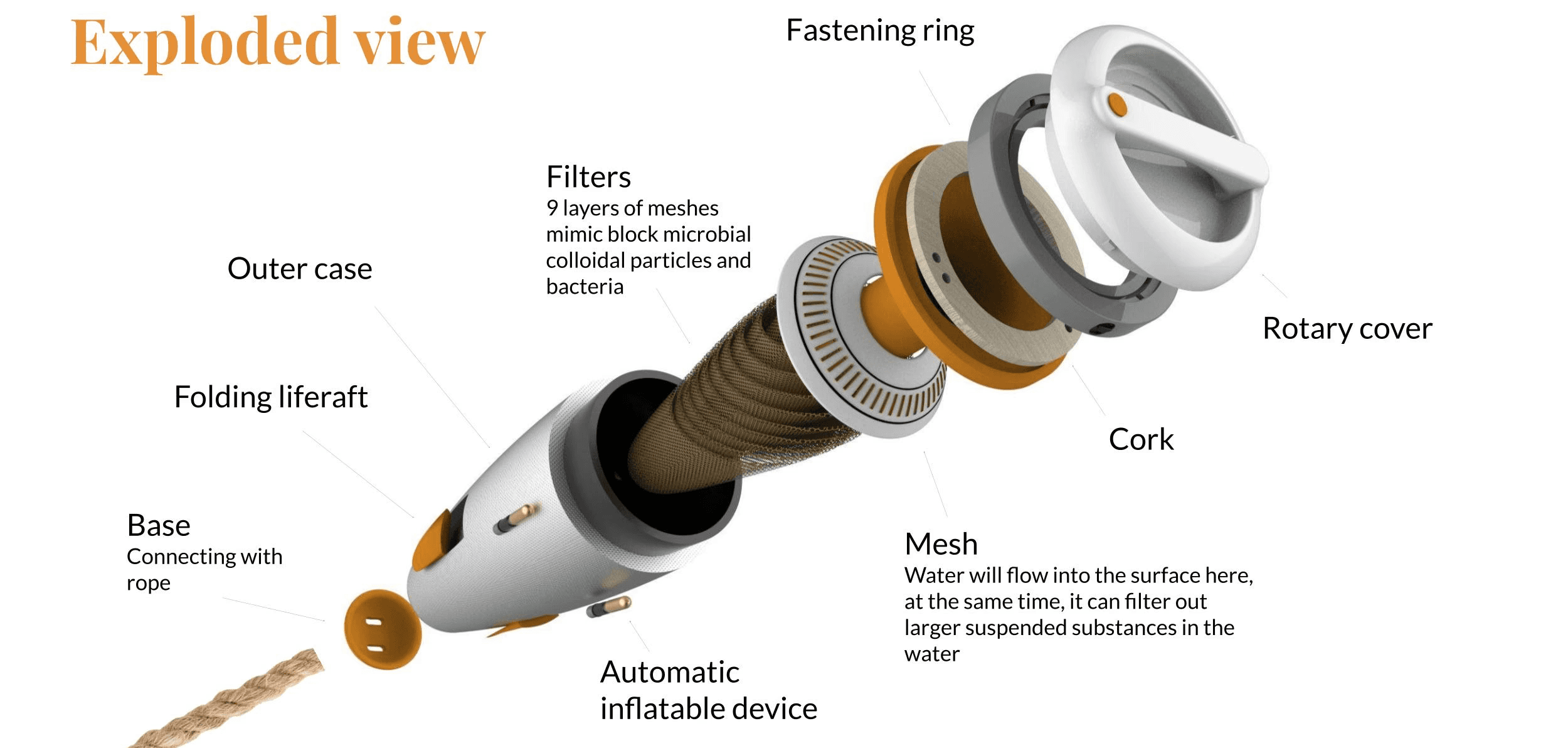
The "water bottle" structure is placed in bollard. When the flood comes, it could rise with the rise of water, water goes into the bottle and is filtered. When it rises over 24 inches, the three temporary liferafts would automatically pomp out. A small family may be able to stay on the liferafts and get clean water while waiting for being rescued.
Design
Every form follows function, and every function follows nature
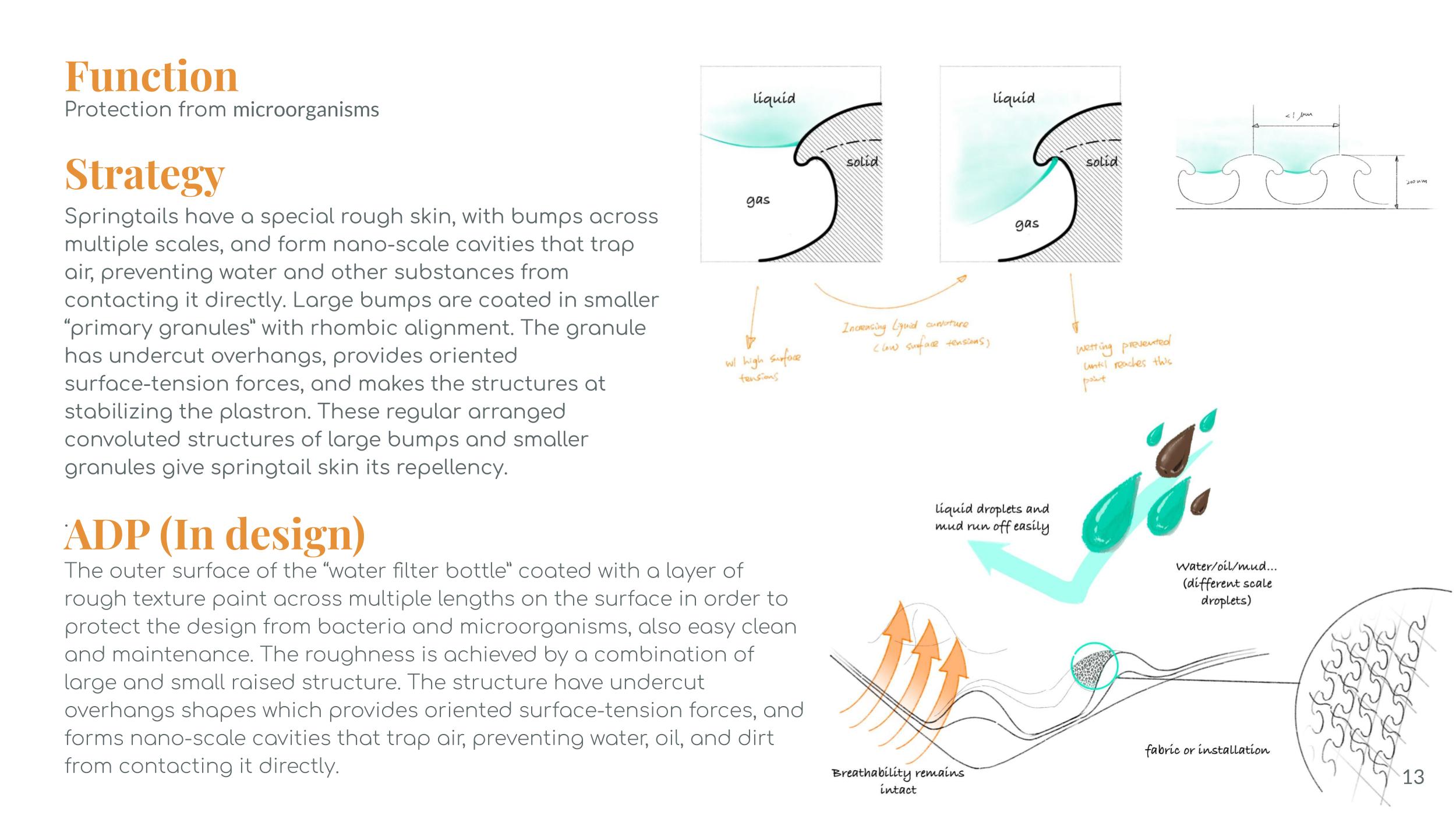
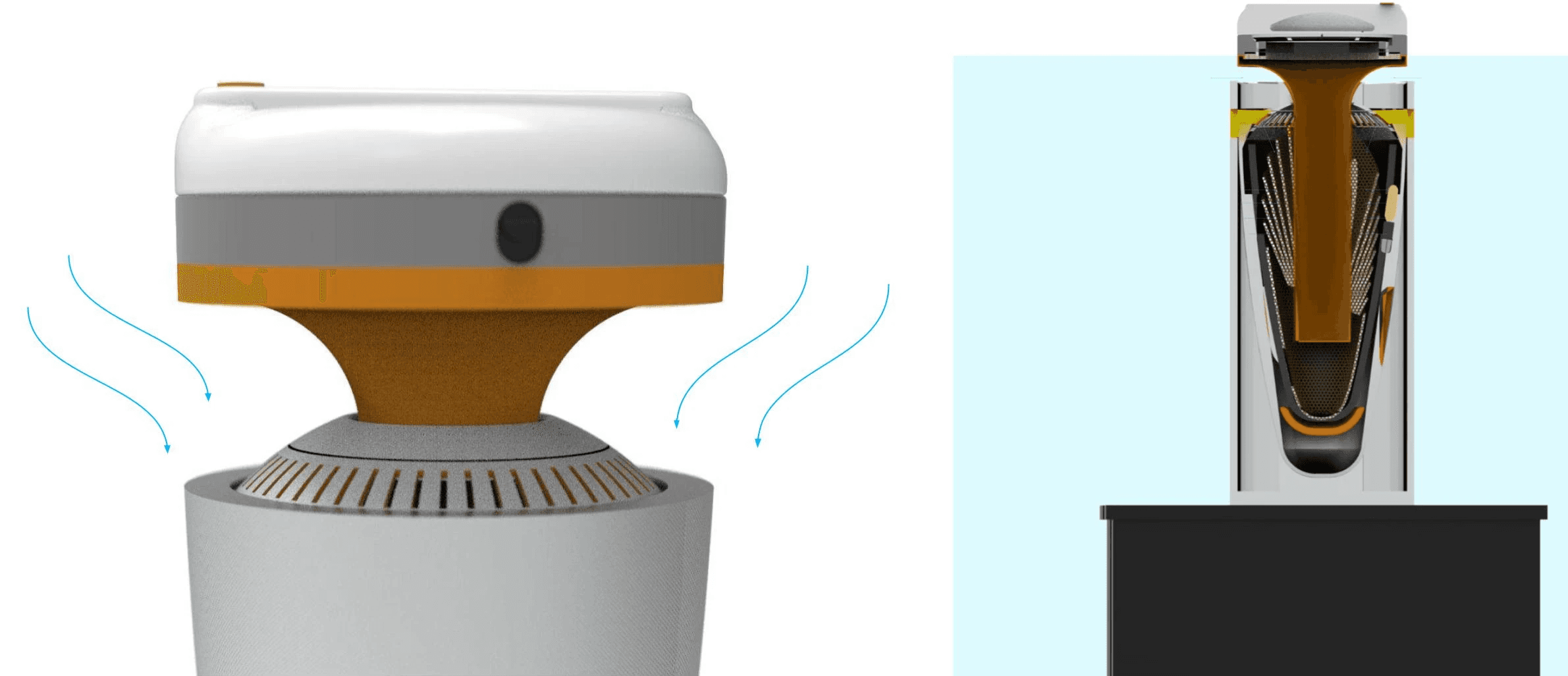
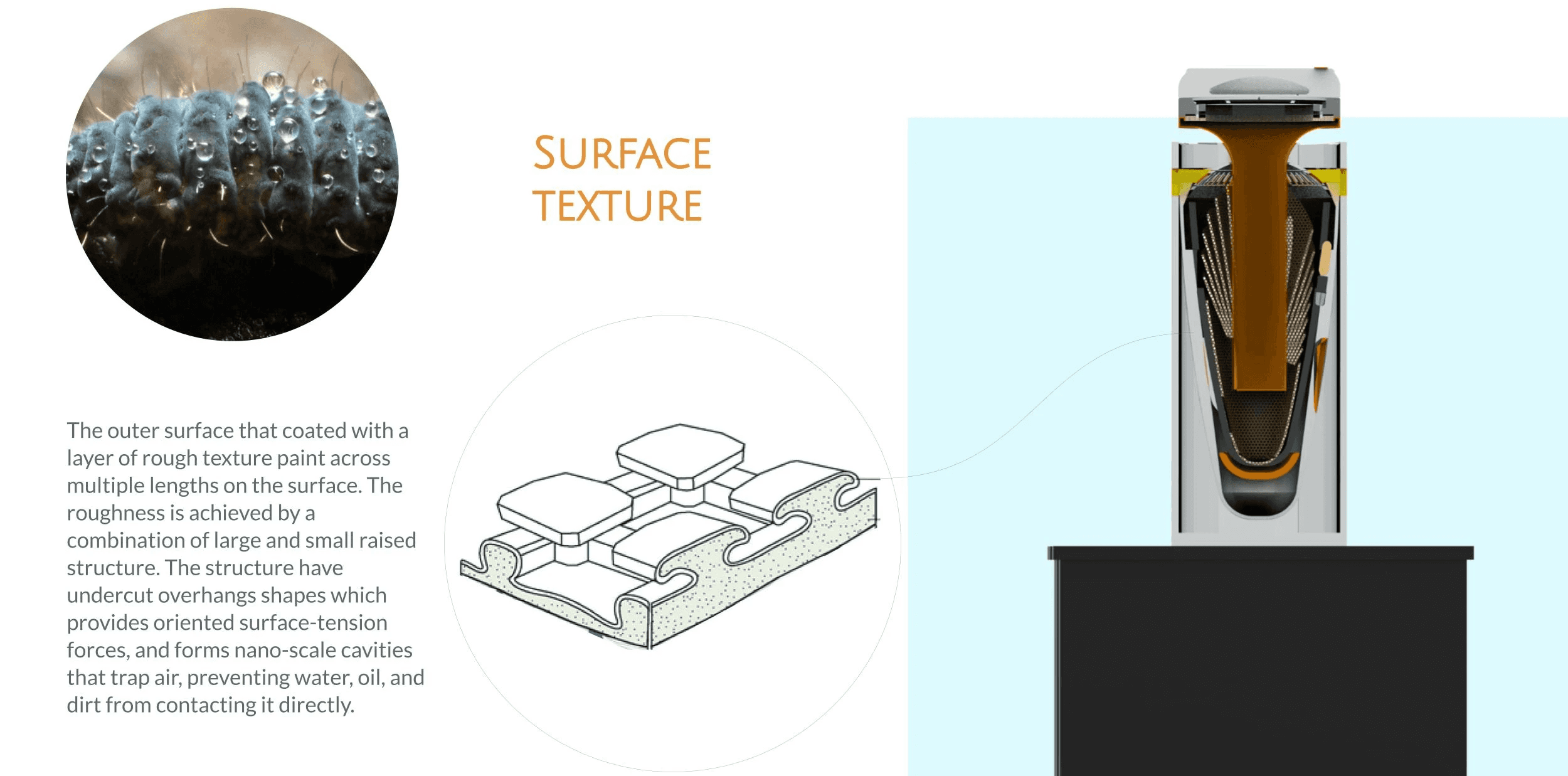
Springtails → Outer surface texture The multi-scale bumpy skin is replicated as a nano-textured coating on the bollard's exterior, trapping air to repel floodwater, bacteria, and contaminants on contact.
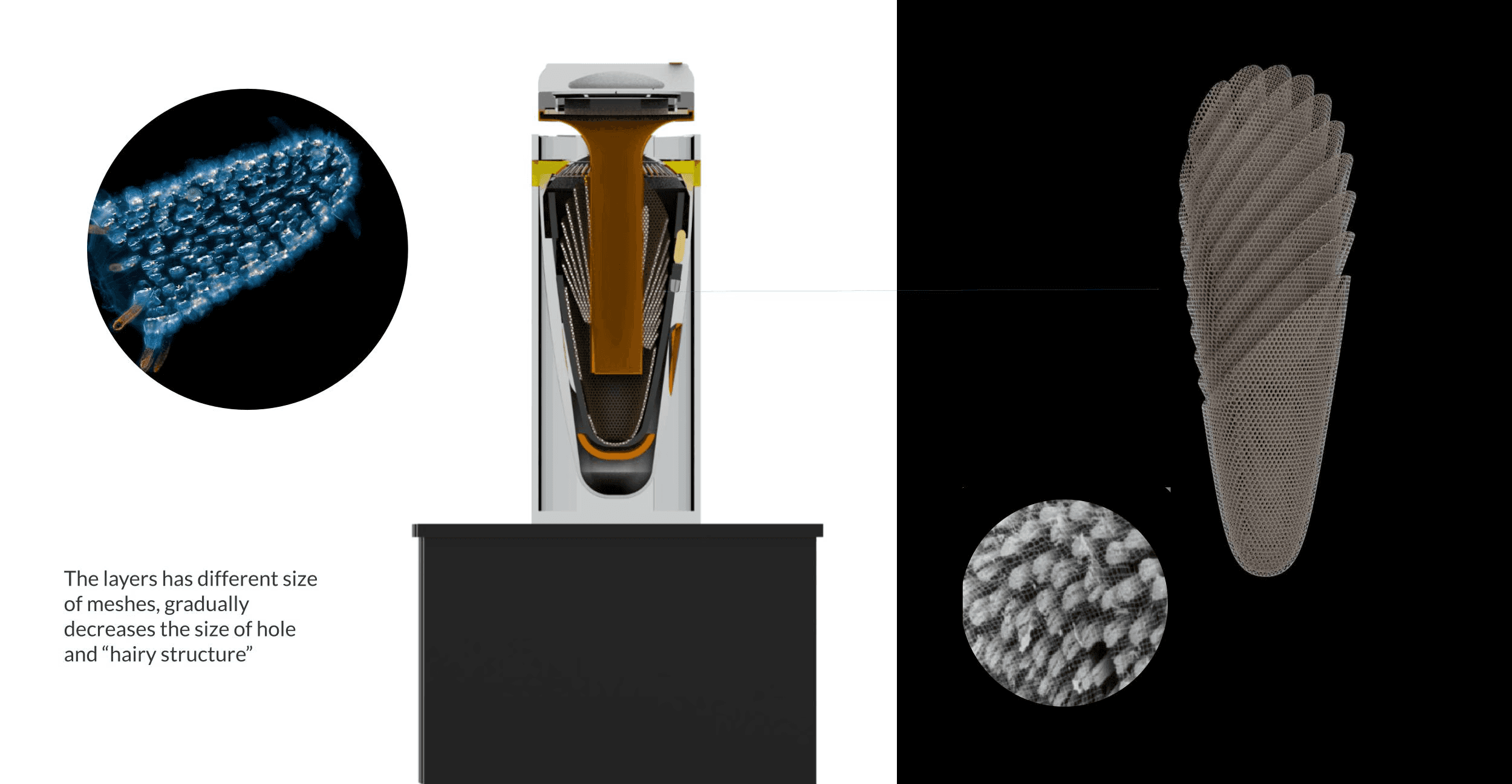
Salps → Filter layers Nine graduated mesh layers mimic the salp's mucus net — progressively smaller holes with hairy structures catch particles down to bacterial and colloidal scale.
Bull Kelp → Filter mesh geometry The blade's adaptive shape — flat in fast flow, ruffled in slow — is applied to the filter mesh, which twists or flattens with flood velocity to maximize particle contact.
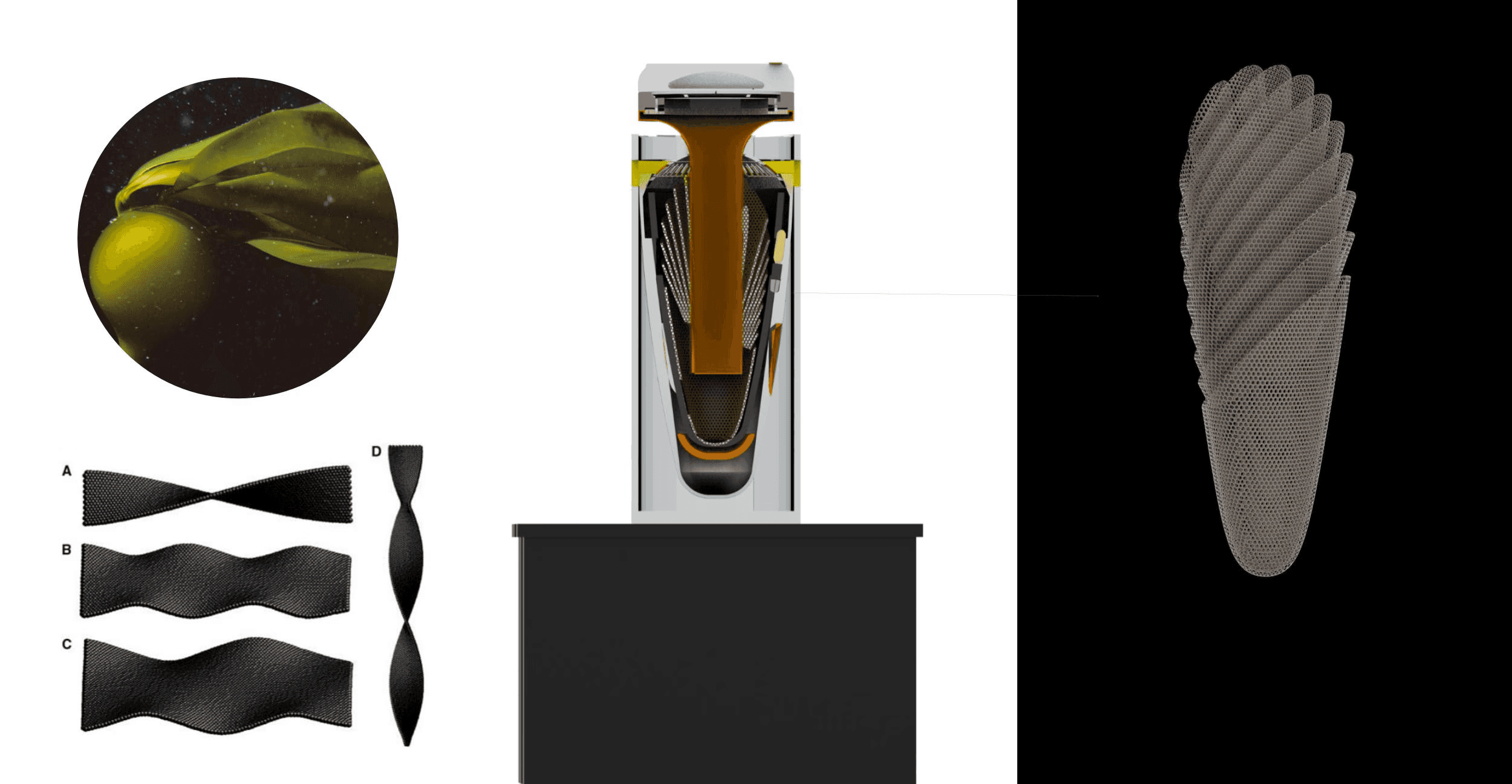
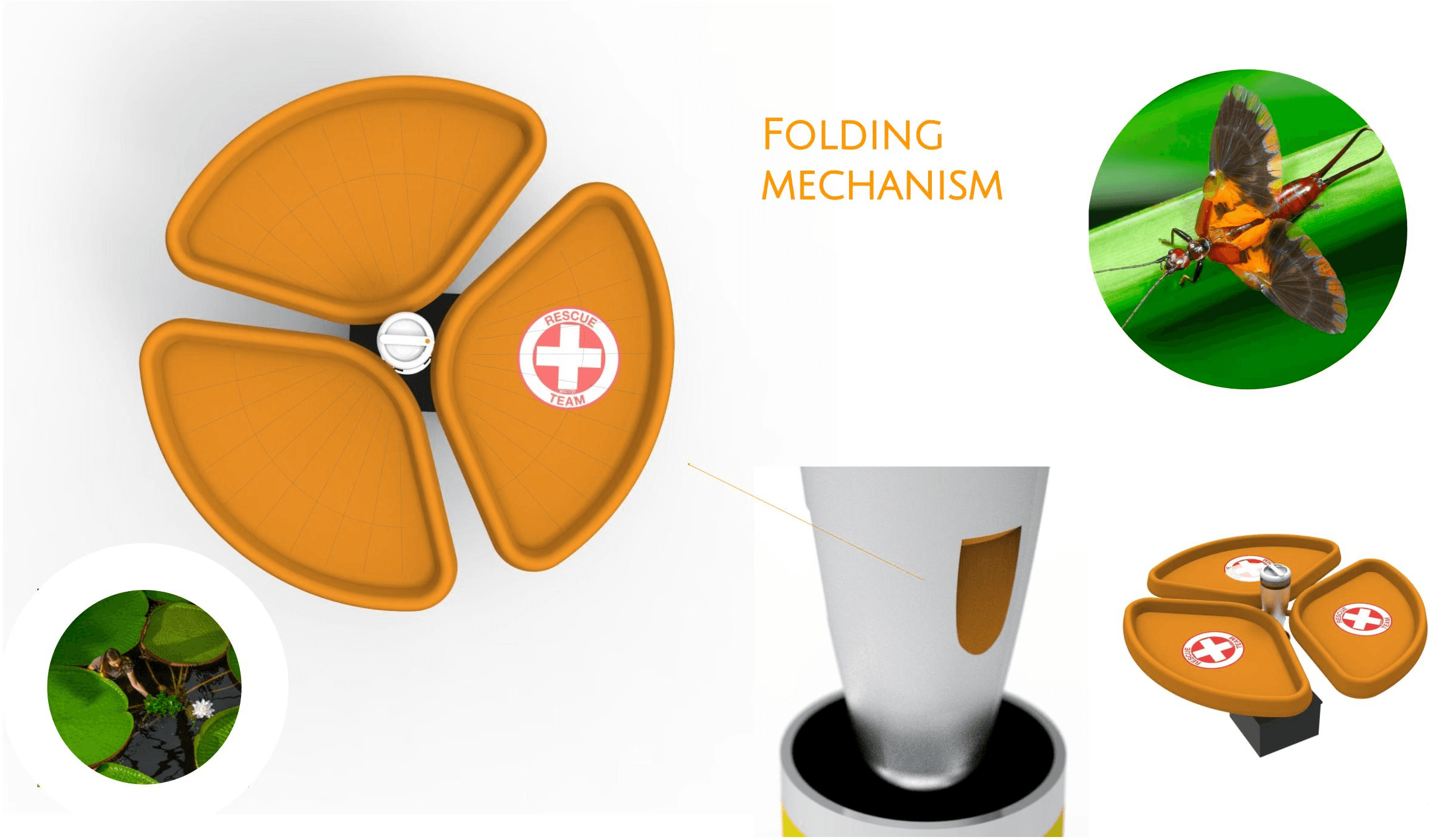
Earwigs → Folding liferaft The fan-fold wing mechanism is applied to three inflatable liferaft panels, allowing them to compress to 1/15 their deployed size and pop open instantly when CO₂ is released.
Lily Pad → Liferaft form The broad, buoyant pad shape with a hollow stem is translated into the liferaft's flat floating surface, supported by the bollard's rising body as buoyancy.
Learnings
Ask nature. Be inspired by nature. Design to translate.
Biomimicry taught me that nature has already solved most of the problems we face — we just haven't been looking closely enough. Every organism I studied had spent millions of years perfecting a single survival strategy. My job wasn't to invent, it was to translate.
2022
FloodLeaf
A flood-response bollard that filters drinking water and deploys emergency liferafts — inspired by springtails, salps, earwigs, and lily pads.
Academic Exploration
Industrial Design
Biomimicry
Intro
What if a bio-inspired bollard could save your life from a flood?
My role in the project
Sole designer · research, concept, biomimicry strategy, industrial design, and 3D visualization.
Design Brief
The design concept aims to help those in need get clean water quickly and conveniently, and provide a temporary liferaft solution for people to stay waiting for rescue
The Climate crisis has had a profound effect on the weather. It causes river floods to become larger or more frequent than they used to be in many places, and exacerbate extreme flood events.
But the flood isn't just take away human life, it also poses a particular threat to drinking water systems. Bacteria and microorganisms can end up everywhere along where the flood path through. So the two of the major challenges for those affected by natural flood disasters are finding clean drinking water and survival.
Research Bio-solution
I Ask … How Does Nature Solves These Problems?
I studied five organisms and translated their survival strategies into design solutions
From filtering bacteria to deploying liferafts in seconds.
Springtails — Nano-scale skin texture repels bacteria and microorganisms without any coating.
Salps — Sticky mucus nets capture particles smaller than the mesh, filtering even viruses from water.
Earwigs — Wings fold to 1/15 their size, inspiring liferafts that deploy instantly from almost nothing.
Lily Pad — Buoyant flat form with an oxygen-filled stem, keeping the whole system afloat under load.
Bull Kelp — Blade shape shifts with water flow, maximizing filter surface contact at any flood speed.
Design
A water filtration system and emergency liferaft, hidden inside the bollards already lining your street
The "water bottle" structure is placed in bollard. When the flood comes, it could rise with the rise of water, water goes into the bottle and is filtered. When it rises over 24 inches, the three temporary liferafts would automatically pomp out. A small family may be able to stay on the liferafts and get clean water while waiting for being rescued.
Design
Every form follows function, and every function follows nature
Springtails → Outer surface texture The multi-scale bumpy skin is replicated as a nano-textured coating on the bollard's exterior, trapping air to repel floodwater, bacteria, and contaminants on contact.
Salps → Filter layers Nine graduated mesh layers mimic the salp's mucus net — progressively smaller holes with hairy structures catch particles down to bacterial and colloidal scale.
Bull Kelp → Filter mesh geometry The blade's adaptive shape — flat in fast flow, ruffled in slow — is applied to the filter mesh, which twists or flattens with flood velocity to maximize particle contact.
Earwigs → Folding liferaft The fan-fold wing mechanism is applied to three inflatable liferaft panels, allowing them to compress to 1/15 their deployed size and pop open instantly when CO₂ is released.
Lily Pad → Liferaft form The broad, buoyant pad shape with a hollow stem is translated into the liferaft's flat floating surface, supported by the bollard's rising body as buoyancy.
Learnings
Ask nature. Be inspired by nature. Design to translate.
Biomimicry taught me that nature has already solved most of the problems we face — we just haven't been looking closely enough. Every organism I studied had spent millions of years perfecting a single survival strategy. My job wasn't to invent, it was to translate.
2022
FloodLeaf
A flood-response bollard that filters drinking water and deploys emergency liferafts — inspired by springtails, salps, earwigs, and lily pads.
Academic Exploration
Industrial Design
Biomimicry
Intro
What if a bio-inspired bollard could save your life from a flood?
My role in the project
Sole designer · research, concept, biomimicry strategy, industrial design, and 3D visualization.
Design Brief
The design concept aims to help those in need get clean water quickly and conveniently, and provide a temporary liferaft solution for people to stay waiting for rescue
The Climate crisis has had a profound effect on the weather. It causes river floods to become larger or more frequent than they used to be in many places, and exacerbate extreme flood events.
But the flood isn't just take away human life, it also poses a particular threat to drinking water systems. Bacteria and microorganisms can end up everywhere along where the flood path through. So the two of the major challenges for those affected by natural flood disasters are finding clean drinking water and survival.
Research Bio-solution
I Ask … How Does Nature Solves These Problems?
I studied five organisms and translated their survival strategies into design solutions
From filtering bacteria to deploying liferafts in seconds.
Springtails — Nano-scale skin texture repels bacteria and microorganisms without any coating.
Salps — Sticky mucus nets capture particles smaller than the mesh, filtering even viruses from water.
Earwigs — Wings fold to 1/15 their size, inspiring liferafts that deploy instantly from almost nothing.
Lily Pad — Buoyant flat form with an oxygen-filled stem, keeping the whole system afloat under load.
Bull Kelp — Blade shape shifts with water flow, maximizing filter surface contact at any flood speed.
Design
A water filtration system and emergency liferaft, hidden inside the bollards already lining your street
The "water bottle" structure is placed in bollard. When the flood comes, it could rise with the rise of water, water goes into the bottle and is filtered. When it rises over 24 inches, the three temporary liferafts would automatically pomp out. A small family may be able to stay on the liferafts and get clean water while waiting for being rescued.
Design
Every form follows function, and every function follows nature
Springtails → Outer surface texture The multi-scale bumpy skin is replicated as a nano-textured coating on the bollard's exterior, trapping air to repel floodwater, bacteria, and contaminants on contact.
Salps → Filter layers Nine graduated mesh layers mimic the salp's mucus net — progressively smaller holes with hairy structures catch particles down to bacterial and colloidal scale.
Bull Kelp → Filter mesh geometry The blade's adaptive shape — flat in fast flow, ruffled in slow — is applied to the filter mesh, which twists or flattens with flood velocity to maximize particle contact.
Earwigs → Folding liferaft The fan-fold wing mechanism is applied to three inflatable liferaft panels, allowing them to compress to 1/15 their deployed size and pop open instantly when CO₂ is released.
Lily Pad → Liferaft form The broad, buoyant pad shape with a hollow stem is translated into the liferaft's flat floating surface, supported by the bollard's rising body as buoyancy.
Learnings
Ask nature. Be inspired by nature. Design to translate.
Biomimicry taught me that nature has already solved most of the problems we face — we just haven't been looking closely enough. Every organism I studied had spent millions of years perfecting a single survival strategy. My job wasn't to invent, it was to translate.